



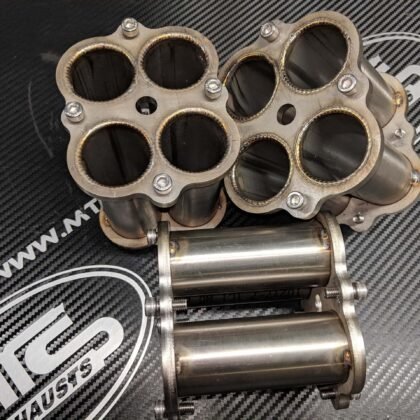


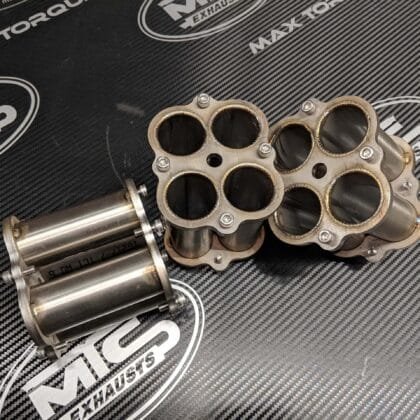

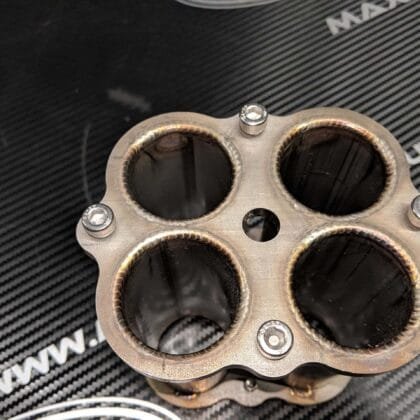
Honda Fireblade HTEV Exhaust valve eliminator CBR929RR CBR954RR 2000 01 02 2003
£ 63.00
The Honda Fireblade HTEV exhaust valve eliminator CBR929RR CBR954RR 2000 01 02 2003 unlocks premium performance with perfect fitment and engineering excellence. Eliminate restrictive valve operation for enhanced throttle response and power delivery. Precision-engineered for your classic Fireblade.
Table of Contents
- Why You Need the Honda Fireblade HTEV Exhaust Valve Eliminator CBR929RR CBR954RR 2000 01 02 2003
- Premium Build Quality and Engineering Excellence in Every Honda Fireblade HTEV Exhaust Valve Eliminator CBR929RR CBR954RR 2000 01 02 2003
- Perfect Fitment for the Honda Fireblade HTEV Exhaust Valve Eliminator CBR929RR CBR954RR 2000 01 02 2003
- Installation Notes and Practical Advice
- Frequently Asked Questions
- Will this affect my bike's MOT?
- Will it work with my aftermarket exhaust or silencer?
- Do I need to remap my bike after fitting?
- What will I notice after fitting?
The honda fireblade htev exhaust valve eliminator cbr929rr cbr954rr 2000 01 02 2003 is the definitive solution to one of the most persistent problems plaguing early 2000s Honda Fireblades — the troublesome Honda Throttle-Controlled Exhaust Valve (HTEV) system that was designed with good intentions but has become a genuine liability on bikes now over two decades old.
If you own a CBR929RR or CBR954RR from the 2000, 2001, 2002, or 2003 model years, you’ll be all too familiar with the headaches this butterfly valve mechanism causes. Sticking valves, seized servo motors, frayed cables, rattling linkages, and restricted exhaust flow are just a few of the issues riders face when the HTEV system starts to fail.
Our precision-engineered eliminator plate removes all of that complexity in one clean, permanent fix — allowing your Fireblade to breathe freely and perform exactly as Honda’s engineers originally intended, without the compromises of an ageing, fault-prone valve system standing in the way.
At Max Torque Cans, we’ve been solving real-world exhaust problems for real riders for years. We understand the Fireblade platform inside out, and this eliminator has been designed with the same obsessive attention to detail and commitment to quality that goes into every product we manufacture. Whether you’re running the original Honda silencer or you’ve already upgraded to a premium aftermarket can, removing the HTEV mechanism is one of the single best modifications you can make for improved mid-range throttle response, a cleaner exhaust note, and long-term reliability you can depend on.
Why You Need the Honda Fireblade HTEV Exhaust Valve Eliminator CBR929RR CBR954RR 2000 01 02 2003
The HTEV system was Honda’s engineering answer to managing low-rpm exhaust characteristics by using a butterfly valve located in the midpipe. In theory, the valve closes partially at lower revs to soften the exhaust note and improve back-pressure characteristics, then opens fully at higher revs to unleash maximum performance. In practice, on bikes that are now well into their third decade, the servo motors fail, the valves seize in place, the cables stretch and fray, and the entire system becomes a genuine performance liability.
The result is a permanently restricted or erratically behaving exhaust that robs your Fireblade of the sharp throttle response and free-breathing performance it was built to deliver.
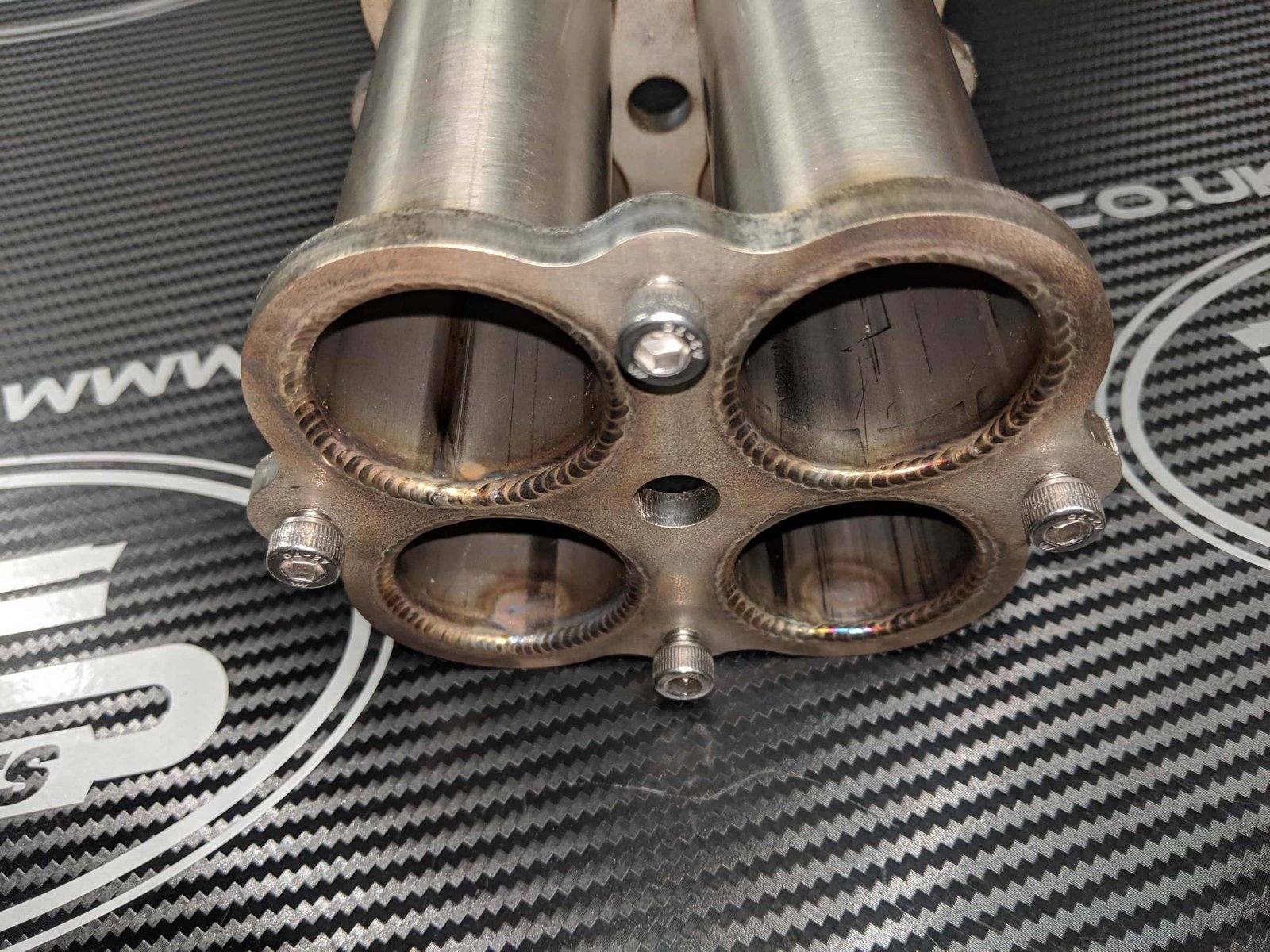
Our honda fireblade htev exhaust valve eliminator cbr929rr cbr954rr 2000 01 02 2003 replaces all of that complexity with a single, solid blanking plate that seals off the valve aperture completely and permanently. No more servo motor. No more cables. No more seized butterfly valve. Just clean, unrestricted exhaust flow from the headers right the way through to your performance exhaust or aftermarket silencer.
It’s a straightforward, reliable fix that restores your CBR to the way it should perform — and the way it would have been designed if emissions regulations hadn’t required the HTEV system in the first place.
Premium Build Quality and Engineering Excellence in Every Honda Fireblade HTEV Exhaust Valve Eliminator CBR929RR CBR954RR 2000 01 02 2003
Quality matters when it comes to exhaust components. A poorly made blanking plate can leak, warp under heat cycles, or fail to seal properly — creating back-pressure problems that are worse than the original valve. That’s why our eliminator plate is CNC laser-cut from premium-grade T304 stainless steel, precision-engineered to exact tolerances for a flush, gap-free fit every single time.
T304 stainless is the material of choice for performance exhaust components because it resists the extreme thermal expansion and contraction that occurs every time you ride. Lesser materials warp, crack, and corrode over time. Our eliminator plate will outlast your ownership of the bike.
The finish and profile are designed to match the original Honda fitment, so it looks factory-correct when installed on the bike. We supply the eliminator complete with 8 x 6mm stainless steel Allen bolts — a deliberate upgrade over the original 10mm fasteners because they’re significantly easier to access and torque correctly in the tight confines of the midpipe area.
It’s a small but genuinely useful detail that makes a real difference when you’re working on the bike. Every aspect of this product has been thought through with the end user in mind, because we’re riders and workshop engineers ourselves — we know what matters.
Perfect Fitment for the Honda Fireblade HTEV Exhaust Valve Eliminator CBR929RR CBR954RR 2000 01 02 2003
Fitment is everything when it comes to exhaust modifications. Our honda fireblade htev exhaust valve eliminator cbr929rr cbr954rr 2000 01 02 2003 is specifically engineered for the following Honda models:
- Honda CBR929RR Fireblade — 2000 and 2001 model years
- Honda CBR954RR Fireblade — 2002 and 2003 model years
The 929 and 954 Fireblades share the same HTEV configuration across all four model years, so our eliminator fits all of them without any modification whatsoever. The plate drops into the original location with no trimming, no filing, and no improvisation required. If you’re unsure whether your bike falls within this fitment range, check your frame number or model plate. If you have a CBR929RR or CBR954RR from 2000 to 2003, this eliminator is the correct part for your machine.
As with all quality exhaust work, it’s essential to reuse your standard metal gasket when refitting the eliminator plate. Do not use a paper or composite gasket as a replacement — the original metal gasket is specifically designed to cope with the heat in this location and gives the best possible seal with our stainless plate. This is a critical detail that ensures a leak-free installation and long-term reliability.
Installation Notes and Practical Advice
This is primarily a workshop job, but a mechanically competent rider who is comfortable with tools and basic exhaust work should be perfectly capable of carrying out this installation at home. Allow the bike to cool completely before you begin — exhaust components retain heat for a long time and can cause serious burns.
You’ll need to remove the relevant section of the midpipe to access the HTEV location, so have your workshop manual to hand for reference. Disconnect and remove the servo motor and all associated cabling — these are no longer needed once the eliminator is in place.
Clean the mating face on the pipe thoroughly before fitting the eliminator plate, then refit using your original metal gasket and the 8 x 6mm stainless Allen bolts supplied. Torque the bolts evenly in a cross pattern to ensure a consistent seal across the entire mating surface. Once refitted, run the bike up to temperature and check for any leaks before riding.
If you’re not confident tackling this yourself, your local independent motorcycle workshop will handle this as a routine job — the parts are all there, and the labour is straightforward for a trained mechanic.
For more information on exhaust system modifications and performance upgrades, Motorcycle News offers a wealth of technical articles and buyer’s guides that can help you get the most from your machine. And if you’re working on other performance upgrades for different bikes, take a look at our Aprilia RS660 De-Cat DownPipes — another beautifully made piece of stainless pipework engineered to unlock the full potential of your machine.
Frequently Asked Questions
Will this affect my bike’s MOT?
Removing the HTEV mechanism does not affect noise or emissions output in any meaningful way at MOT test level. However, if you have any concerns, we’d always recommend speaking to your local testing station beforehand to confirm their specific requirements.
Will it work with my aftermarket exhaust or silencer?
Absolutely. The eliminator works with any exhaust setup — whether you’re running the stock Honda can, a slip-on silencer, or a full aftermarket performance exhaust system. It simply removes the restriction from the midpipe, allowing your entire exhaust system to breathe more freely.
Do I need to remap my bike after fitting?
No remap is required. The eliminator plate does not alter fuelling, air intake, or ECU parameters. It simply removes the mechanical restriction created by the HTEV valve. Most riders find the bike runs exactly as it should — only better.
What will I notice after fitting?
Most riders report a slightly freer, more consistent throttle response across the rev range, a cleaner and more purposeful exhaust note, and the complete elimination of any rattling, hesitation, or fault codes associated with a failing HTEV servo. It’s a subtle but genuinely noticeable improvement in how the bike feels and performs.
The honda fireblade htev exhaust valve eliminator cbr929rr cbr954rr 2000 01 02 2003 is a no-nonsense upgrade for a Fireblade that deserves to perform at its absolute best. Order yours today and let your 929 or 954 breathe the way it was always meant to — without the compromise of an ageing, fault-prone valve system getting in the way.
3D View
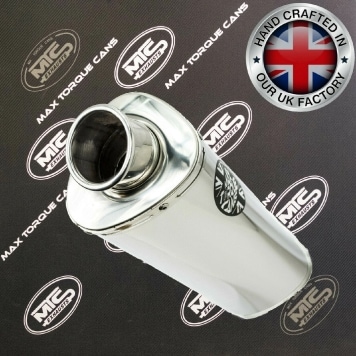
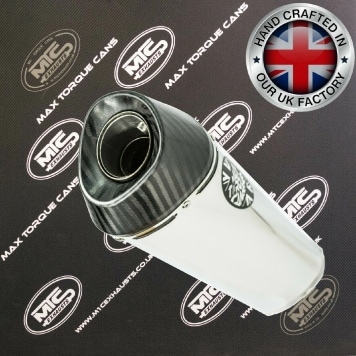
Please click on the exhaust below to see the 3D model




Road Legal / Race
All our Road Legal exhausts come with a Road Legal Baffle / Decibel Killer + BSAU ( British Road-Legal ) markings.
All our RACE exhausts do not come with a Road Legal Baffle / Decibel Killer + do not have any BSAU ( British Road-Legal ) markings. and are marked NOT FOR ROAD USE
2024 Road legal exhaust statement:
At Max Torque Cans we prioritise safety and compliance in the world of motorcycle exhausts. Our commitment to adhering to regulations is evident in our product design and labelling, and hence with new updates from ACEM, DVSA and DfT, we are ensuring our exhaust systems are compliant with new and upcoming legislation and regulations. Specifically, two changes detailed below:
Road Legal Exhausts: Our road legal exhausts will have the BSAU stamped markings and be crafted with non-removable baffles, aligning seamlessly with the standards set by ACEM (European Association of Motorcycle Manufacturers). These baffles are an integral part of our design to ensure that your motorcycle exhaust complies with road regulations, providing you with a legal and enjoyable riding experience.
Race Exhausts and Silencers: For those seeking an exhilarating experience on the track, our race exhausts are engineered to deliver optimal performance. Clearly marked with type approval markings “Not for Road Use” etched into the side, these exhausts are specifically designed for racing applications. This distinction is in line with DVSA policy, ensuring that our race exhausts are suitable for track use, meeting the highest performance standards without compromising on safety.
Fitting Guides
Related products
-
 BMW
BMWBMW R1200 R 2015–2018
Price range: £ 137.60 through £ 328.52 This product has multiple variants. The options may be chosen on the product pageUnlock peak performance with our BMW R1200 R 2015–2018 exhaust system, engineered with British precision craftsmanship. Experience enhanced power delivery and a thrilling exhaust note that transforms your ride. Clean fitment, straightforward installation.
-
 BMW
BMWBMW F800ST 2006-2013
Price range: £ 137.60 through £ 328.52 This product has multiple variants. The options may be chosen on the product pageUnleash the potential of your BMW F800ST 2006-2013 with Max Torque Cans’ performance exhaust system. Experience sharper throttle response, a more aggressive exhaust note, and a cleaner aesthetic that transforms your sport-tourer. Premium quality engineering meets stunning visual impact.
-
 Ducati
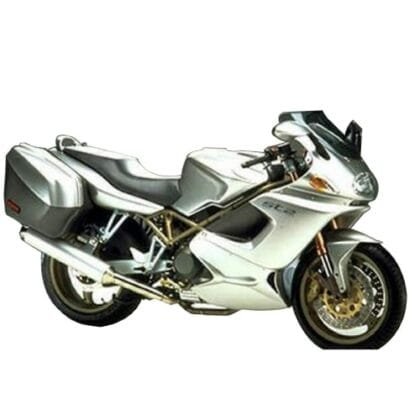
DUCATI ST2-ST3
Price range: £ 259.72 through £ 656.18 This product has multiple variants. The options may be chosen on the product pageUnlock peak performance with our precision-engineered Ducati ST2-ST3 exhaust system. Designed for riders demanding sport and touring excellence, this bolt-on upgrade delivers increased horsepower and an aggressive exhaust note that matches your bike’s ambition.
-
 Aprilia
APRILIA RSV TUONO 1000R & Factory 2006-2010
Price range: £ 201.24 through £ 653.60 This product has multiple variants. The options may be chosen on the product pageUnlock the true potential of your Aprilia RSV Tuono 1000R & Factory 2006-2010 with our performance exhaust system. Experience a deeper, more aggressive sound and sharper throttle response that honours the legendary 998cc V-twin’s raw engineering pedigree. A visual and performance upgrade worthy of this celebrated naked bike.
-
 BMW
BMWBMW S1000RR 2009-2014
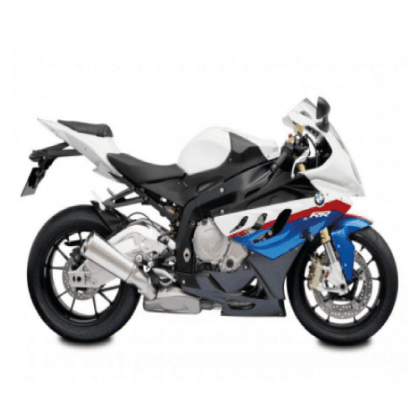
Price range: £ 172.00 through £ 288.96 This product has multiple variants. The options may be chosen on the product pageUnlock pure performance with our Max Torque Cans exhaust for the BMW S1000RR 2009-2014. Gain serious horsepower and aggressive sound whilst shedding weight from your legendary superbike. Purpose-built for riders who demand circuit-ready results.
-
 Aprilia
APRILIA RSV 1000 MILLE 1998-2003
Price range: £ 138.46 through £ 327.66 This product has multiple variants. The options may be chosen on the product pageUnlock the full potential of your Aprilia RSV 1000 Mille 1998-2003 with our premium exhaust system. Gain serious horsepower and torque whilst enjoying that unmistakable Italian superbike sound. Easy bolt-on installation gets you riding harder in minutes.