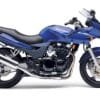


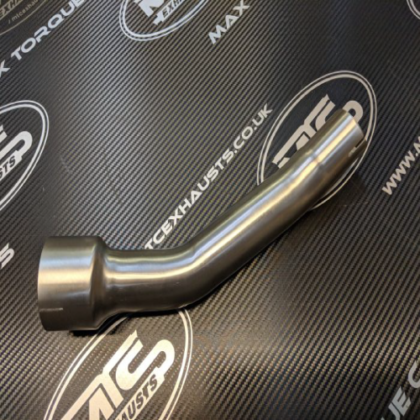


Kawasaki KLZ Versys 1000 2012 – 2019 Stainless De-cat exhaust pipe & clamps
£ 109.00
The Kawasaki KLZ Versys 1000 2012 – 2019 stainless de-cat exhaust pipe & clamps deliver serious weight savings and sharper throttle response in one bolt-on upgrade. Ditch that restrictive OEM catalytic converter and enjoy a cleaner mid-section look—no welding required.
“`html
The kawasaki klz versys 1000 2012 – 2019 stainless de-cat exhaust pipe & clamps represents one of the most effective bolt-on performance upgrades available for your adventure touring machine, delivering meaningful weight savings, sharper throttle response, and a dramatically cleaner mid-section appearance without requiring welding or specialist fabrication skills. If you have been riding around with that bulky, restrictive OEM catalytic converter box hanging beneath your bike, this precision-engineered stainless steel replacement is the upgrade you have been waiting for.
The standard Kawasaki KLZ Versys 1000 cat box weighs a hefty 4.2 kg, whilst the de-cat pipe that replaces it tips the scales at just 0.5 kg—a direct saving of 3.7 kg of centralised, unsprung weight removed from your machine in a single afternoon’s work. On a motorcycle designed for long-distance touring and adventure riding, shedding that kind of mass from the exhaust mid-section makes a genuinely noticeable difference to how the bike carries itself through corners, during low-speed manoeuvring, and when loaded for extended tours.
You will feel the benefit every time you crack the throttle open coming out of a bend or need to pick the bike up off the side stand when fully loaded. The advantages are real, tangible, and immediate—and once you have experienced the improved dynamics with this upgrade fitted, reverting to the standard OEM arrangement simply will not be an option.
What You Receive with the Kawasaki KLZ Versys 1000 2012 – 2019 Stainless De-Cat Exhaust Pipe & Clamps
Every kit has been designed to make the installation process as straightforward as possible for the competent home mechanic. When your order arrives, you will find everything required to complete the job cleanly and securely. Here is exactly what is included in every package:
- One CNC mandrel-bent 50mm diameter de-cat link pipe—precision formed for a perfect, unrestricted exhaust gas flow path
- Fabricated from T304 stainless steel throughout—corrosion-resistant, durable, and built to outlast your ownership of the bike
- Supplied complete with high-quality stainless steel clamps—no need to source additional fixings or hardware
- No welding required—the pipe is designed to clamp directly into position once your OEM headers have been prepared
- Full photographic installation guidance provided—detailed instructions and imagery to assist with header preparation and fitment
The kawasaki klz versys 1000 2012 – 2019 stainless de-cat exhaust pipe & clamps is CNC mandrel bent throughout its entire length, which means the internal diameter is fully maintained around every curve and radius of the pipe. Unlike cheaper crush-bent alternatives—which narrow the bore at every bend and create restriction points that impede exhaust gas flow—mandrel bending preserves a consistent 50mm bore size from end to end.
The result is improved exhaust gas velocity, more responsive throttle feel across the entire rev range, and a cleaner, fuller exhaust note that perfectly suits the character of the Versys 1000’s parallel-twin engine. This construction methodology is the same standard we apply across our entire range, including our popular Ferrari 348 Stainless Steel Catalyst Replacement Pipes, which has proven enormously successful with performance car enthusiasts seeking similar upgrades.
T304 stainless steel is used throughout the construction because it offers an outstanding balance of tensile strength, heat resistance, and long-term corrosion protection. Your Versys will be ridden in all weathers—especially if touring and adventure riding are your primary pursuits—and the last thing you need is a de-cat pipe that begins to degrade, discolour, or rust after its first British winter. With T304 stainless construction, that is simply not a concern you will ever need to entertain.
Fitment and Compatibility for the Kawasaki KLZ Versys 1000 2012 – 2019 Stainless De-Cat Exhaust Pipe & Clamps
This de-cat pipe is designed specifically to fit the Kawasaki KLZ Versys 1000 from model years 2012 through to 2019 inclusive. It connects directly to your existing OEM headers once the standard catalytic converter box has been removed from the system. It is important to note that the installation process does require your standard OEM headers to be cut at the correct position—full photographic instructions and clear guidance on exactly where to make this cut are provided with every order, so you understand precisely what is involved before you begin work.
Once the headers have been prepared correctly, the de-cat pipe fits cleanly into place and is secured using the included stainless steel clamps. There is no welding required at any stage of the process, which keeps this upgrade firmly within the capability of a competent home mechanic with a decent set of tools and a secure workspace.
That said, if you are not entirely confident with the header preparation stage—which involves cutting the OEM exhaust pipework—any local motorcycle workshop will be able to complete this step quickly and at minimal cost before you finish the remainder of the installation yourself.
Your rear silencer—whether it is the standard OEM can or an aftermarket performance exhaust—will connect and fit exactly as it did before the modification. The de-cat pipe maintains the same mounting positions, diameter, and dimensions as the original cat box, so there is no conflict whatsoever with your existing silencer fitment. You simply gain all the performance benefits of catalytic converter removal without any compromise to the rest of your exhaust setup or ground clearance.
Installation Steps for the Kawasaki KLZ Versys 1000 2012 – 2019 Stainless De-Cat Exhaust Pipe & Clamps
This installation is classed as a workshop-level job in terms of skill requirement, but a mechanically minded owner with access to the right tools and a methodical approach should be perfectly capable of completing it at home. The key steps are as follows:
- Remove the standard OEM cat box and associated exhaust pipework from the bike
- Cut the OEM headers at the correct position as clearly indicated in the supplied photographic guidance
- Offer up the de-cat pipe and align it correctly with the prepared header outlets
- Secure the pipe using the included clamps, ensuring all joints are seated cleanly and concentrically
- Reconnect your rear silencer or aftermarket performance can as standard
- Check all clamp positions, torque settings, and alignment before taking the bike out for its first test ride
Full supporting photographs and detailed written instructions are provided with your purchase, and video guidance is also available to help you visualise the complete process before you start. If you are ever unsure about any stage of the installation, we always recommend consulting a qualified motorcycle technician—but for the majority of Versys owners with even modest mechanical experience, this is a very achievable home fit that can be completed in a single afternoon.
According to Motorcycle News, upgrading exhaust components with quality stainless steel materials is one of the most reliable ways to ensure longevity and consistent performance in demanding riding conditions, particularly for adventure touring motorcycles that regularly encounter wet, cold, and corrosive environments.
Will the Kawasaki KLZ Versys 1000 2012 – 2019 Stainless De-Cat Exhaust Pipe & Clamps Affect My MOT?
This is a question we receive regularly from UK-based riders, and the answer will reassure most road users. In the United Kingdom, motorcycles are tested on noise levels during an MOT inspection—not on exhaust emissions. Provided your rear silencer is road-legal and remains within the permitted noise limits, fitting the kawasaki klz versys 1000 2012 – 2019 stainless de-cat exhaust pipe & clamps will not cause your bike to fail its annual test.
This makes it one of those rare performance modifications that is both genuinely effective and entirely practical for riders who rely on their machine every day and still need it to pass its MOT without complication or additional expense. The restrictive, unnecessarily heavy OEM cat box is removed, your bike becomes lighter and more agile, the exhaust note is fuller and more characterful, and throttle response feels noticeably sharper from the moment you pull away.
It is genuinely difficult to think of a more cost-effective single upgrade available for the Versys 1000 platform. If you are interested in exploring high-quality stainless steel exhaust solutions for other vehicles in your collection, take a look at our DAF LF 2013 – 2023 Stainless intercooler pipe—another precision-built component that has been exceptionally well received by commercial vehicle operators seeking improved performance and durability.
Why Buy the Kawasaki KLZ Versys 1000 2012 – 2019 Stainless De-Cat Exhaust Pipe & Clamps from Max Torque Cans?
At Max Torque Cans, we specialise exclusively in motorcycle exhausts, performance cans, and automotive exhaust components. We are not a general parts retailer—every product we stock, design, and supply is focused on one thing: getting the best possible performance, sound, and value from your vehicle. The de-cat pipe for the Versys 1000 has been developed with exactly that same single-minded focus on quality and real-world results.
We know what Versys 1000 riders want from their machine, and this product delivers it directly. Every component is quality-checked before despatch, and our UK-based team is on hand to answer any fitment or technical questions you may have before or
Kawasaki ER6 + Versys MTC Motorbike Exhausts
View Album →
Kawasaki Versys 1000 2011 - 2018
View Album →
Kawasaki Versys 1000 2011 - 2018 De cat
View Album →
Kawasaki Versys SE KLZ1000 2019 -
View Album →
Kawasaki W800 2019 - 2021
View Album →
New Kawasaki Versys 1000 2019- De-Cat Pipe and Exhaust
View Album →
Kawasaki ZX6R 2009 - 2019 MTC Motorbike Exhausts
View Album →
Kawasaki ZZR 1400 2012 MTC Motorbike Exhausts
View Album →
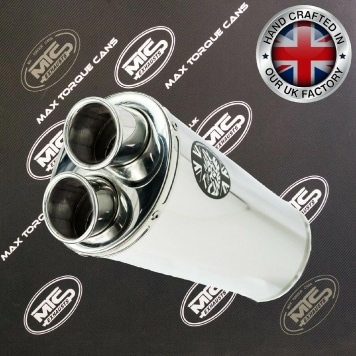
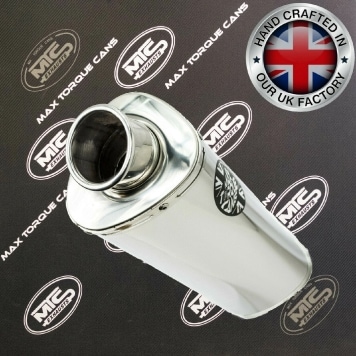
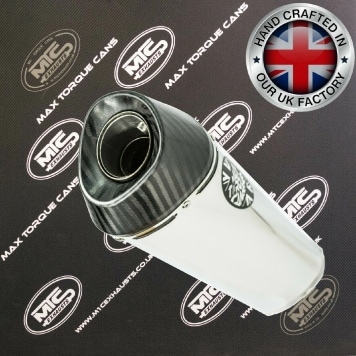
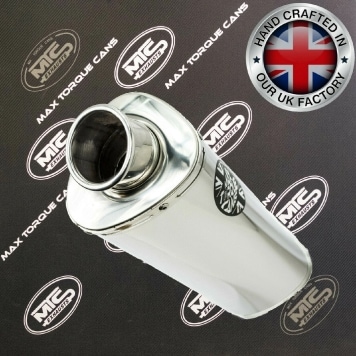
3D View
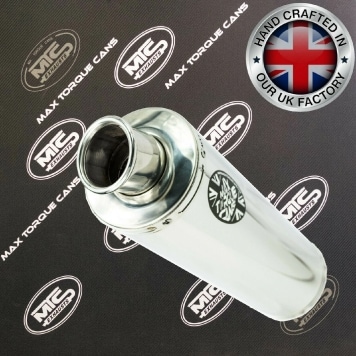
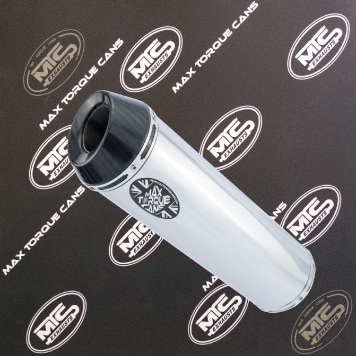
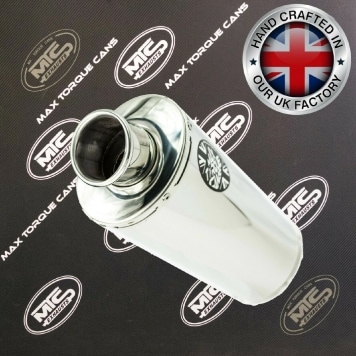
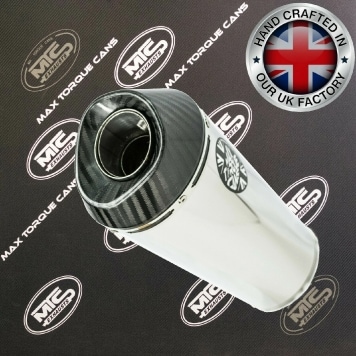
Please click on the exhaust below to see the 3D model




Road Legal / Race
All our Road Legal exhausts come with a Road Legal Baffle / Decibel Killer + BSAU ( British Road-Legal ) markings.
All our RACE exhausts do not come with a Road Legal Baffle / Decibel Killer + do not have any BSAU ( British Road-Legal ) markings. and are marked NOT FOR ROAD USE
2024 Road legal exhaust statement:
At Max Torque Cans we prioritise safety and compliance in the world of motorcycle exhausts. Our commitment to adhering to regulations is evident in our product design and labelling, and hence with new updates from ACEM, DVSA and DfT, we are ensuring our exhaust systems are compliant with new and upcoming legislation and regulations. Specifically, two changes detailed below:
Road Legal Exhausts: Our road legal exhausts will have the BSAU stamped markings and be crafted with non-removable baffles, aligning seamlessly with the standards set by ACEM (European Association of Motorcycle Manufacturers). These baffles are an integral part of our design to ensure that your motorcycle exhaust complies with road regulations, providing you with a legal and enjoyable riding experience.
Race Exhausts and Silencers: For those seeking an exhilarating experience on the track, our race exhausts are engineered to deliver optimal performance. Clearly marked with type approval markings “Not for Road Use” etched into the side, these exhausts are specifically designed for racing applications. This distinction is in line with DVSA policy, ensuring that our race exhausts are suitable for track use, meeting the highest performance standards without compromising on safety.
Fitting Guides
Related products
-
 BMW
BMWBMW F650GS 2008 – 2012
Price range: £ 137.60 through £ 328.52 This product has multiple variants. The options may be chosen on the product pagePremium stainless steel exhaust system engineered specifically for the BMW F650GS 2008 – 2012. Unleash enhanced performance and a deeper, more aggressive sound whilst enjoying superior durability and corrosion resistance. Transform your adventure bike today.
-
 BMW
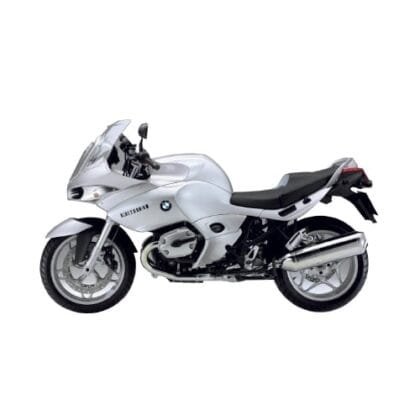
BMWBMW R1200 ST 2005-2007
Price range: £ 137.60 through £ 328.52 This product has multiple variants. The options may be chosen on the product pageUnlock the full potential of your BMW R1200 ST 2005-2007 with our premium performance exhaust kit. Gain increased torque and power whilst enjoying a deep, aggressive sound that matches this sports tourer’s capabilities. Transform your ride with enhanced performance and style.
-
 Ducati
DUCATI 916-748 1994-1999
Price range: £ 259.72 through £ 626.94 This product has multiple variants. The options may be chosen on the product pageUnlock the full potential of your Ducati 916-748 1994-1999 with our premium exhaust link pipe kit. Gain aggressive sound, increased horsepower, and enhanced throttle response whilst maintaining perfect fitment to your original downpipes. Transform your iconic Italian superbike into a true performance machine.
-
 BMW
BMWBMW F800GS 2008 – 2019
Price range: £ 137.60 through £ 328.52 This product has multiple variants. The options may be chosen on the product pageUpgrade your BMW F800GS 2008 – 2019 with Max Torque Cans exhaust for enhanced performance and that signature aggressive sound. Our complete kit delivers improved torque, superior quality construction, and effortless installation. Transform your riding experience today.
-
 BMW
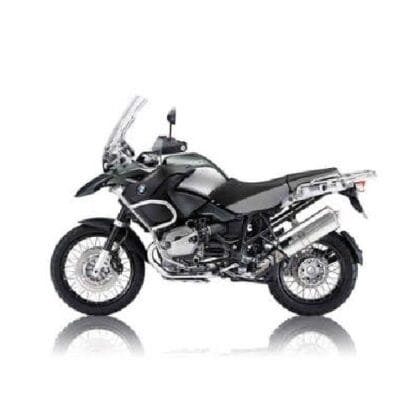
BMWBMW R1200GS 2004-2012
Price range: £ 137.60 through £ 328.52 This product has multiple variants. The options may be chosen on the product pageUnleash the true potential of your BMW R1200GS 2004-2012 with our premium performance exhaust. Gain increased horsepower, improved throttle response, and that unmistakable adventurer’s growl. Built tough for genuine go-anywhere capability.
-
 BMW
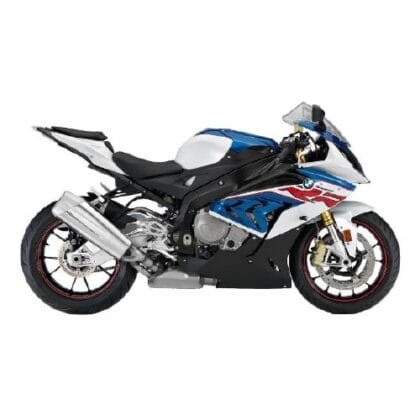
BMWBMW S1000RR 2017-2018
Price range: £ 137.60 through £ 328.52 This product has multiple variants. The options may be chosen on the product pageUnlock your BMW S1000RR 2017-2018‘s full potential with our performance exhaust system. Experience aggressive sound, increased horsepower, and the responsive throttle your superbike deserves. Transform your ride into a truly exhilarating machine.