
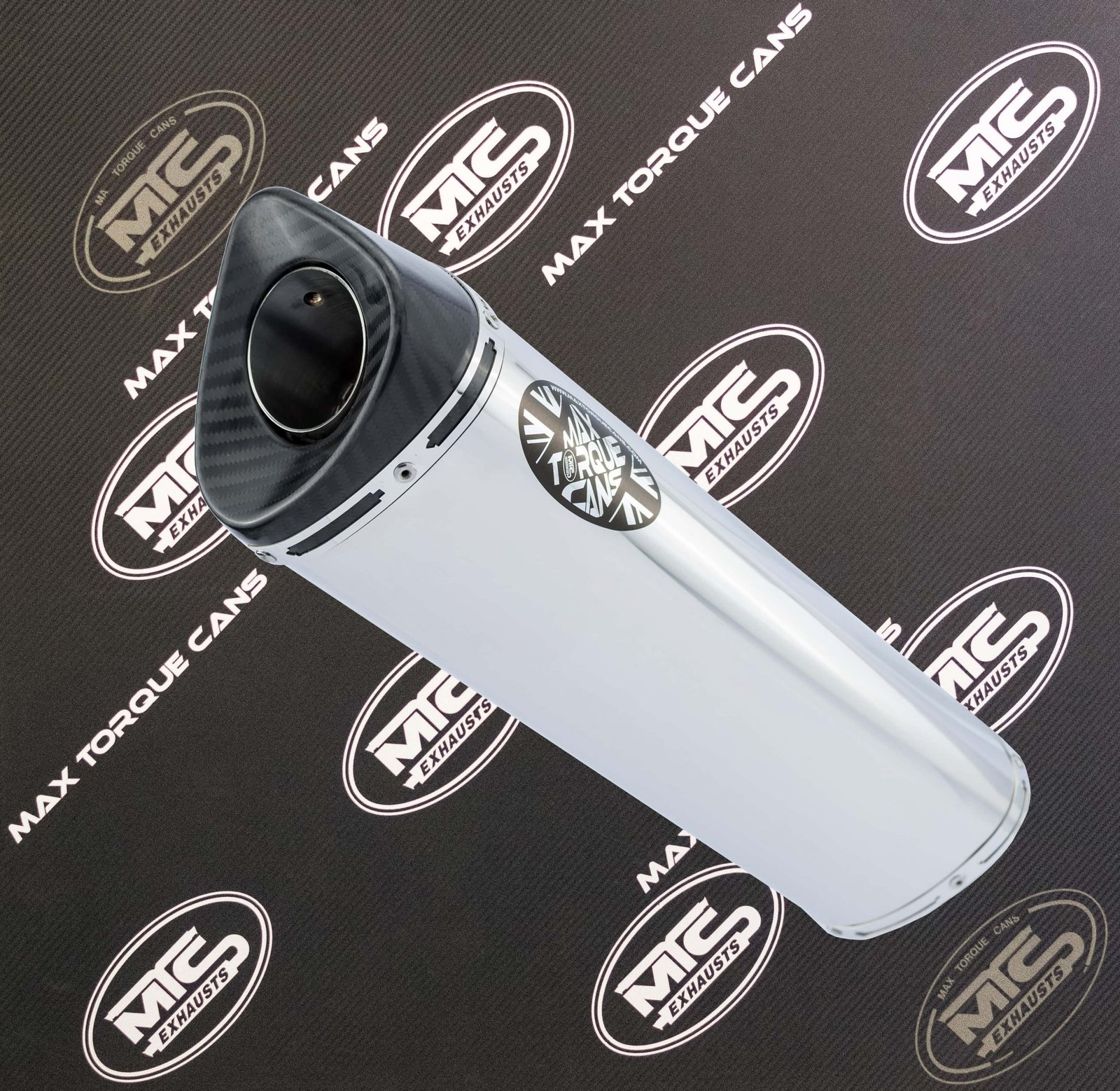
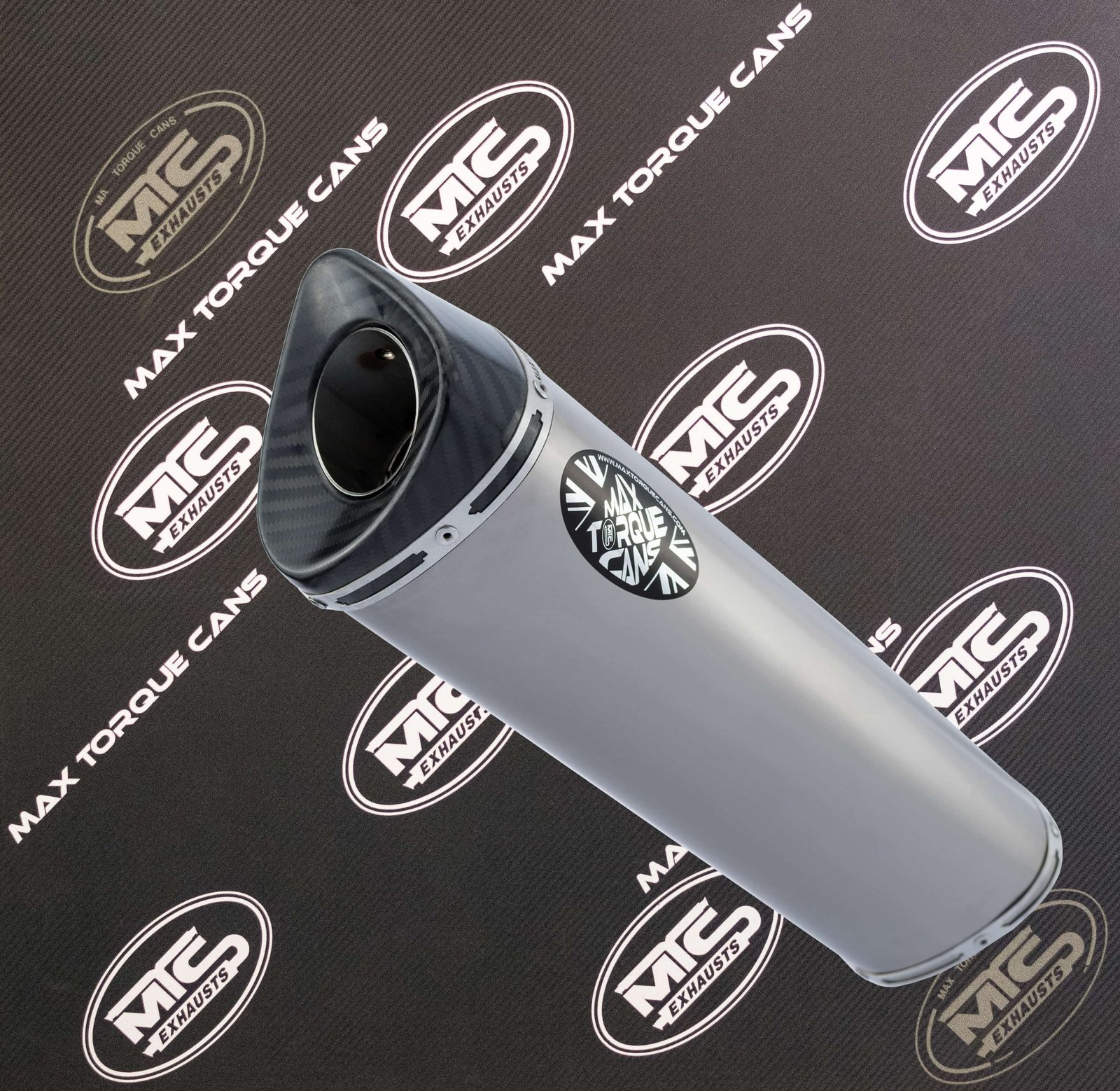

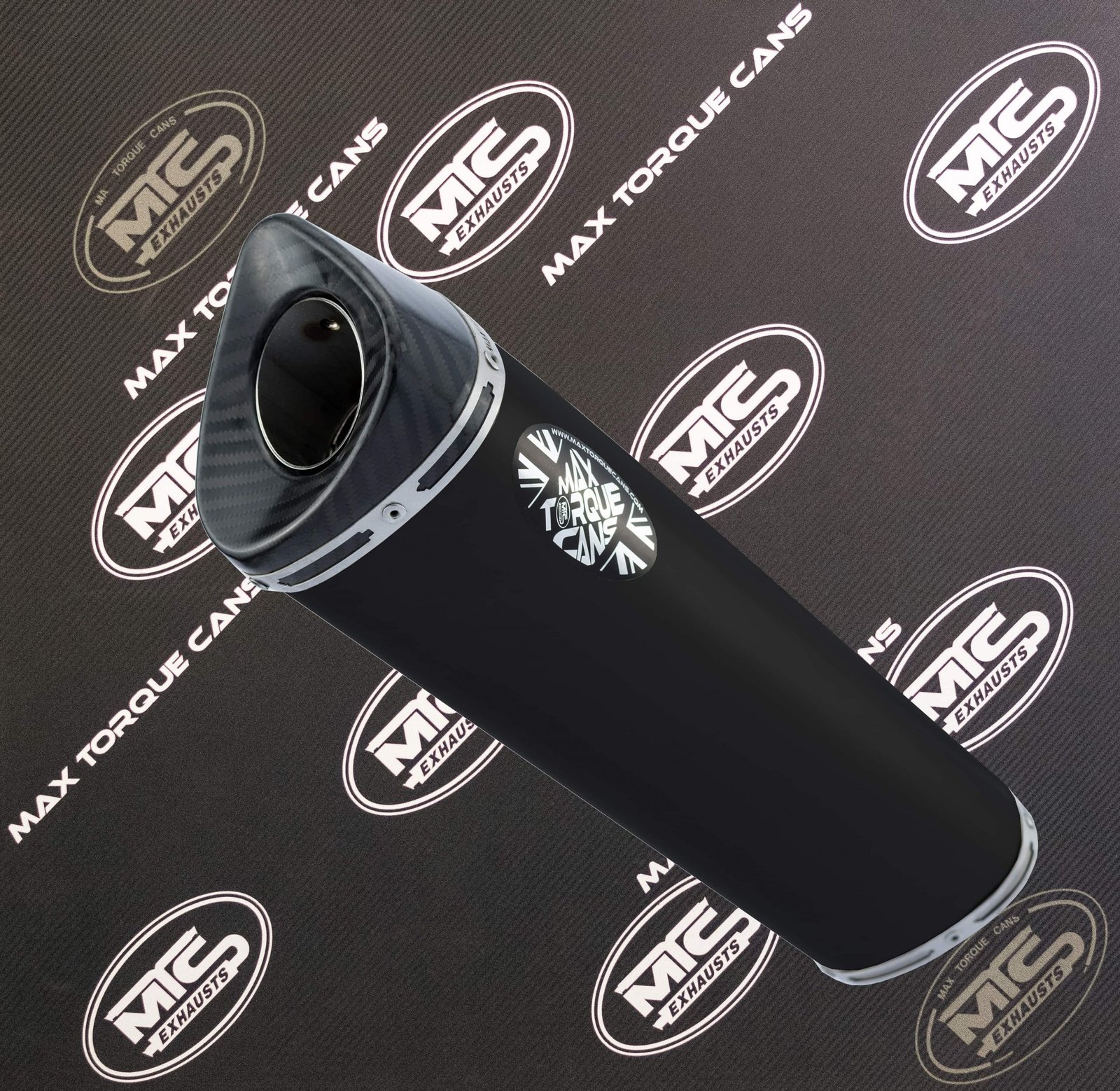
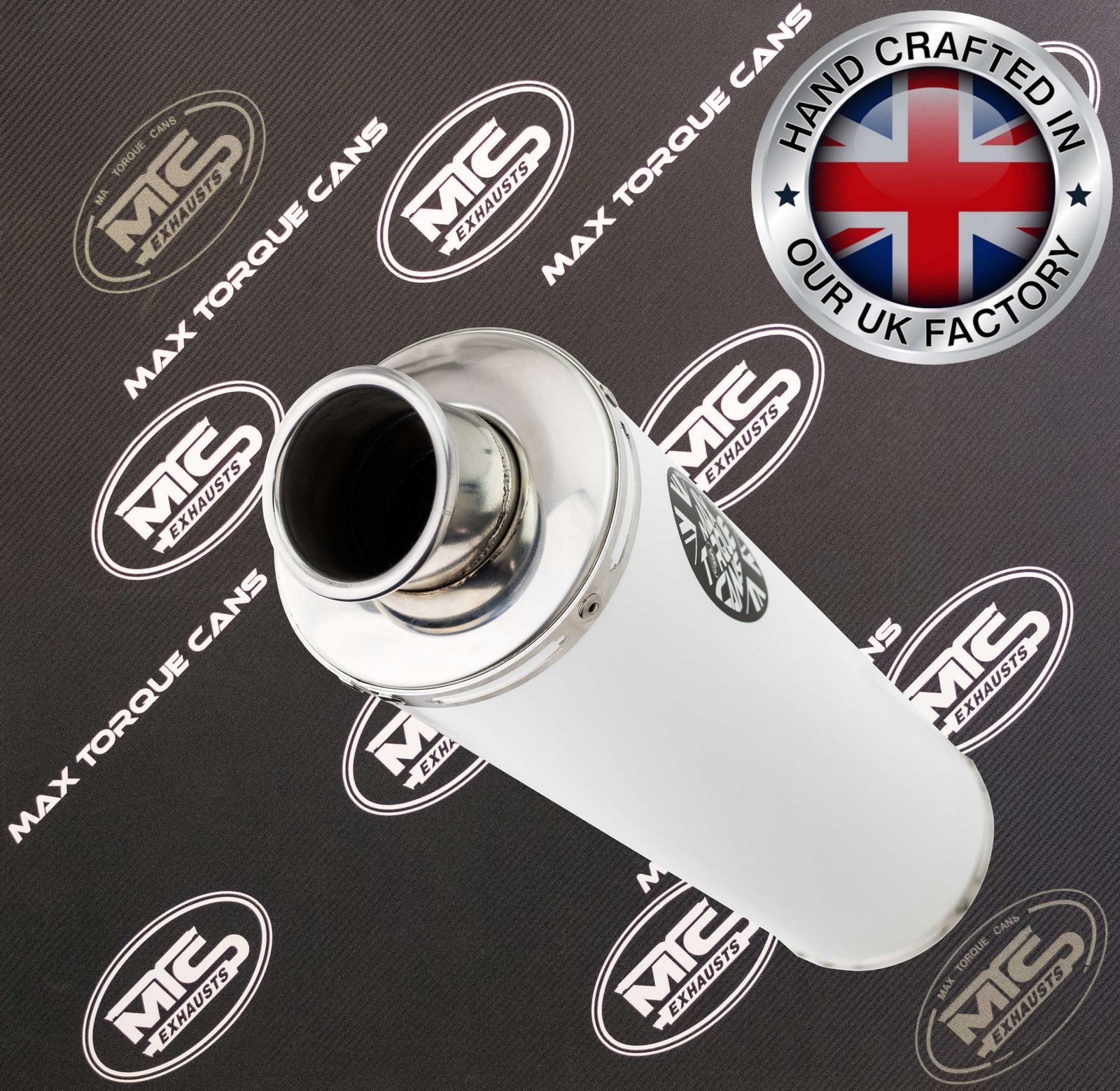





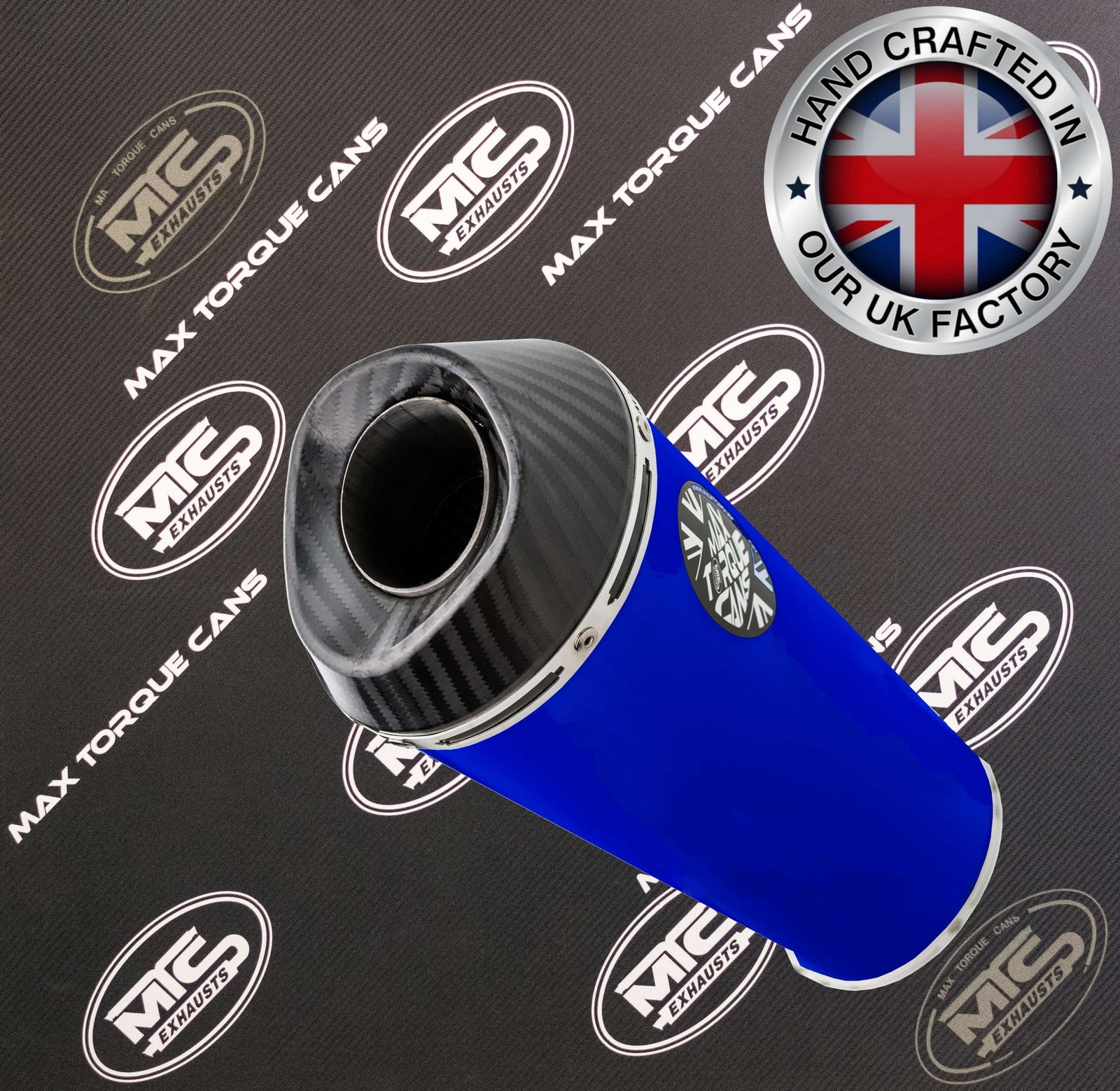
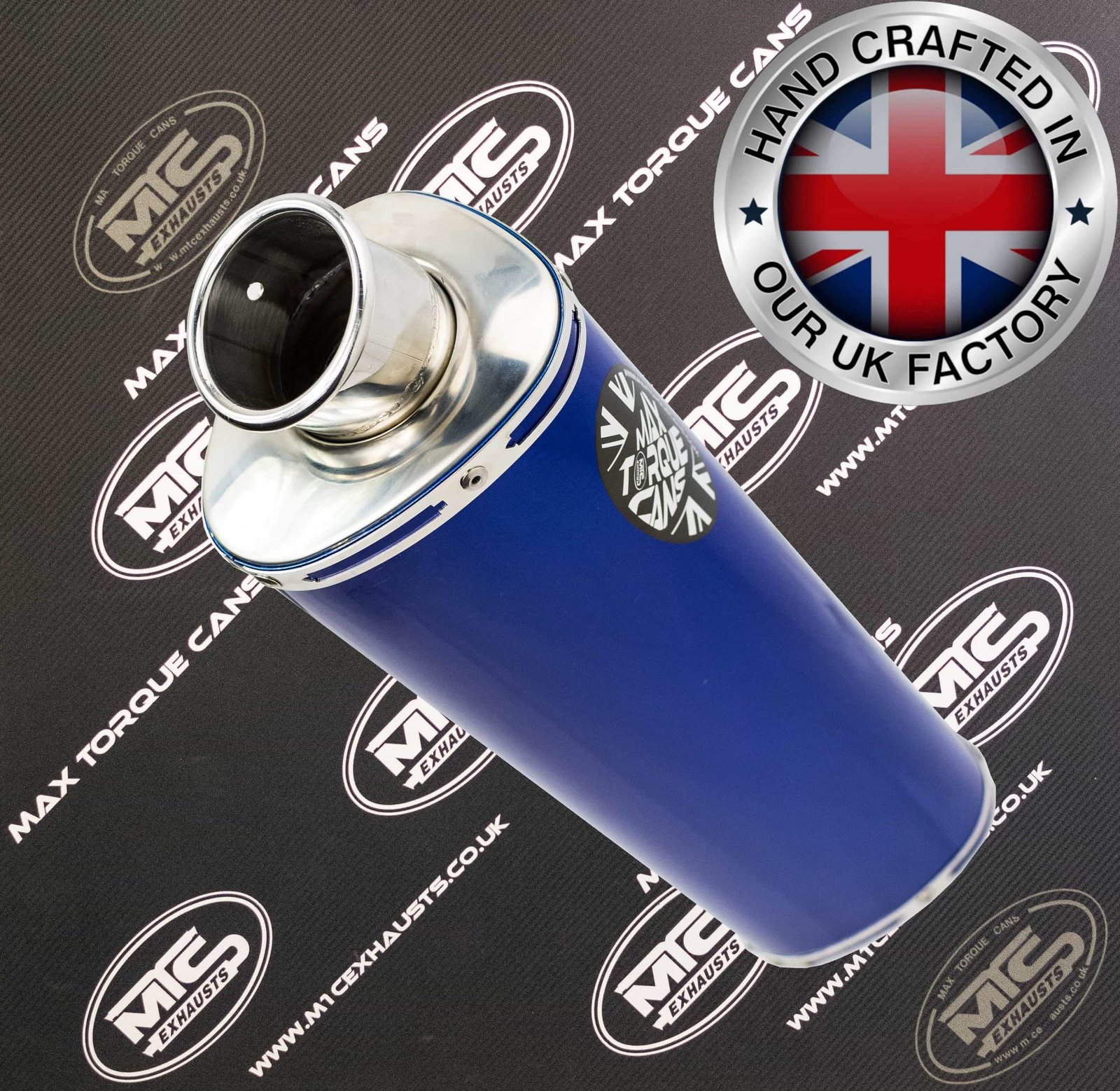


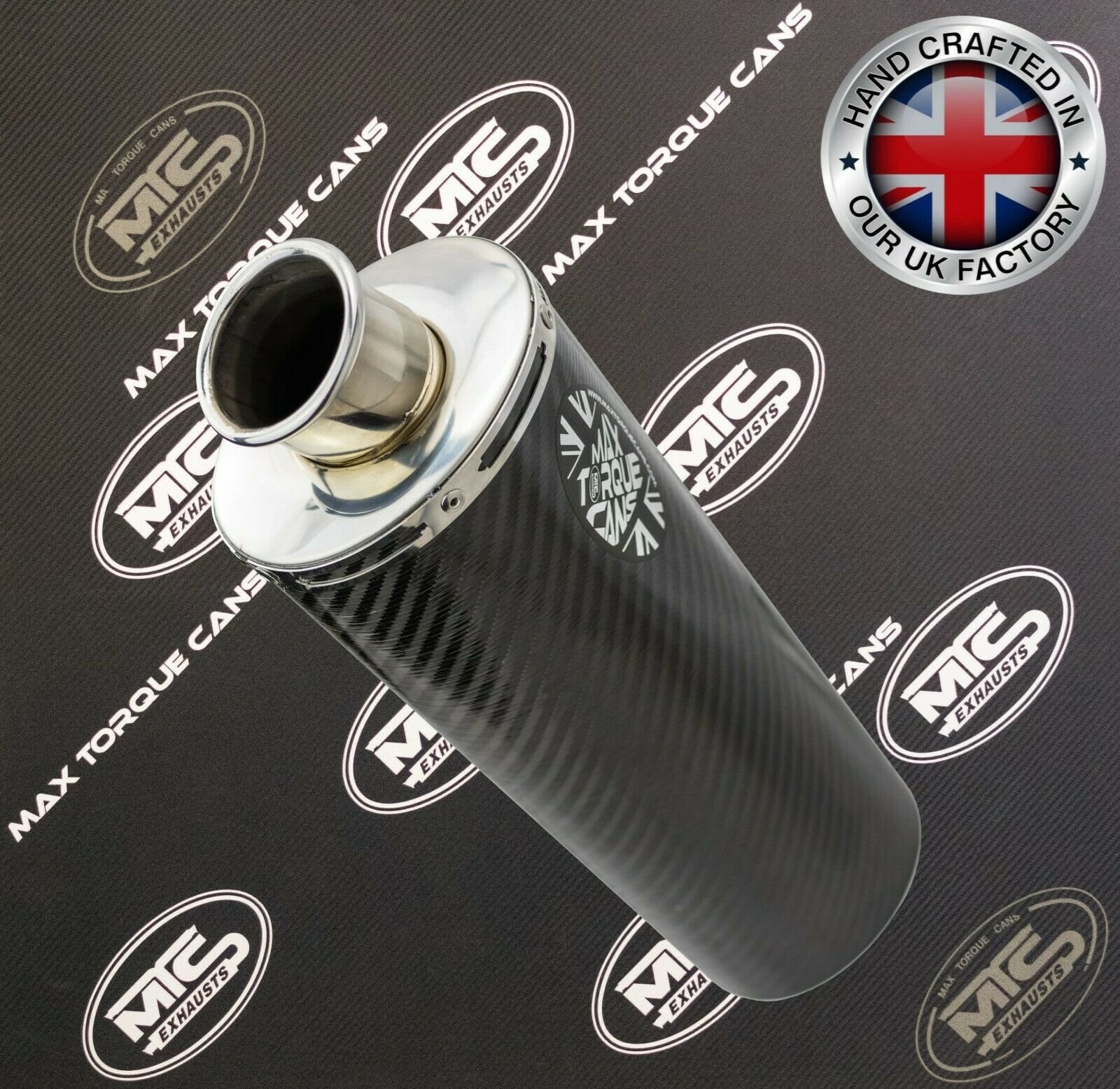


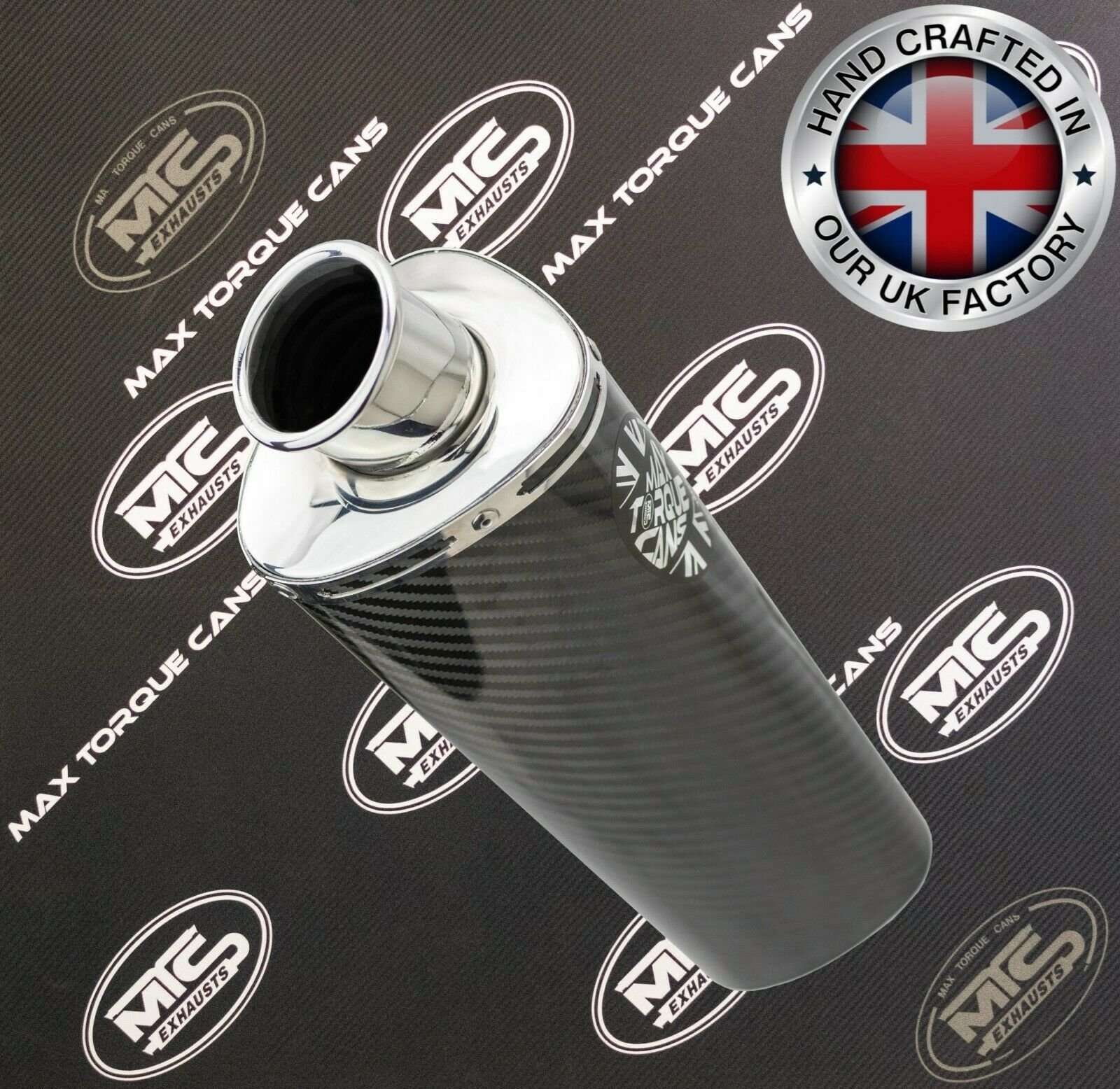


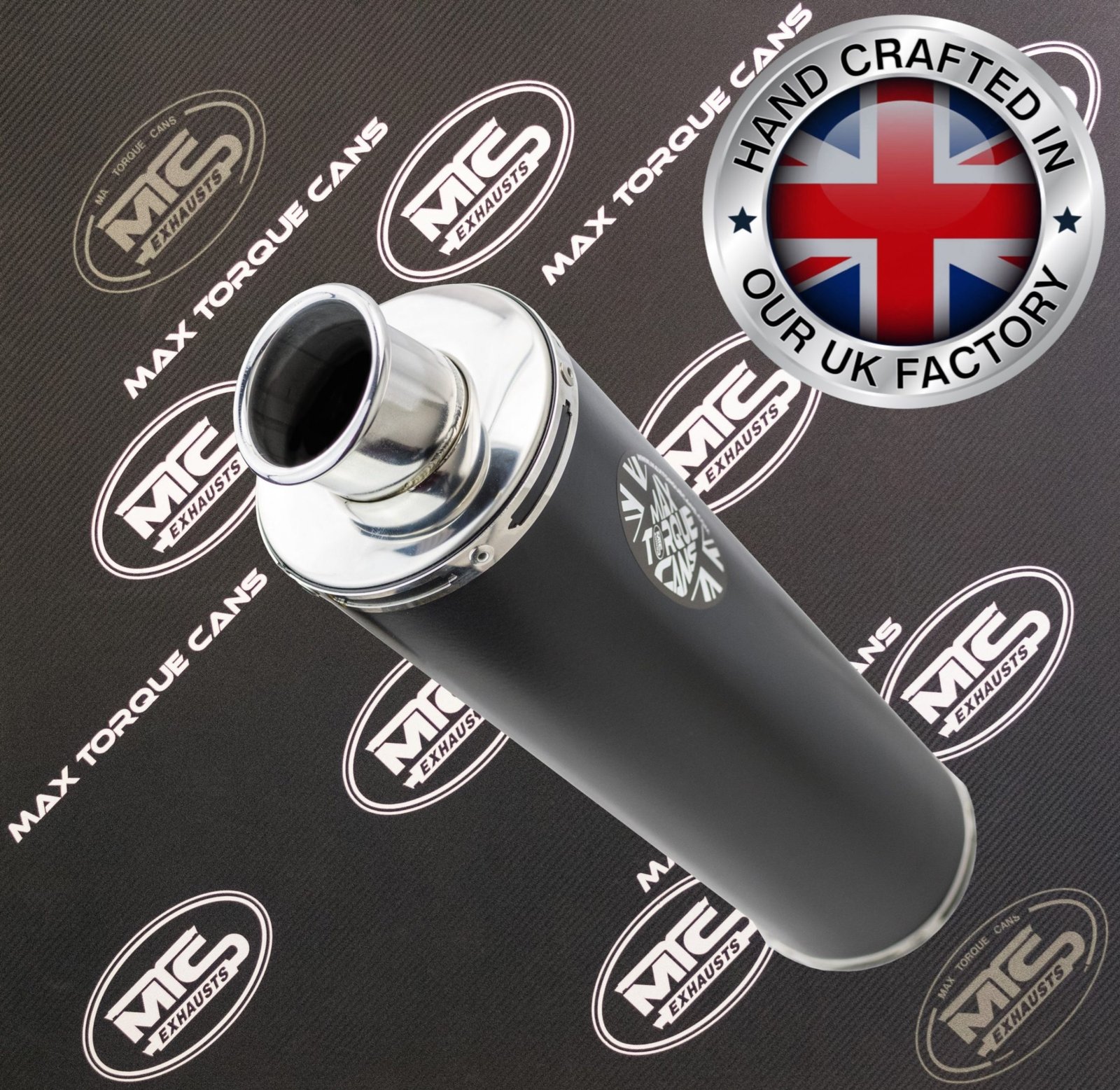

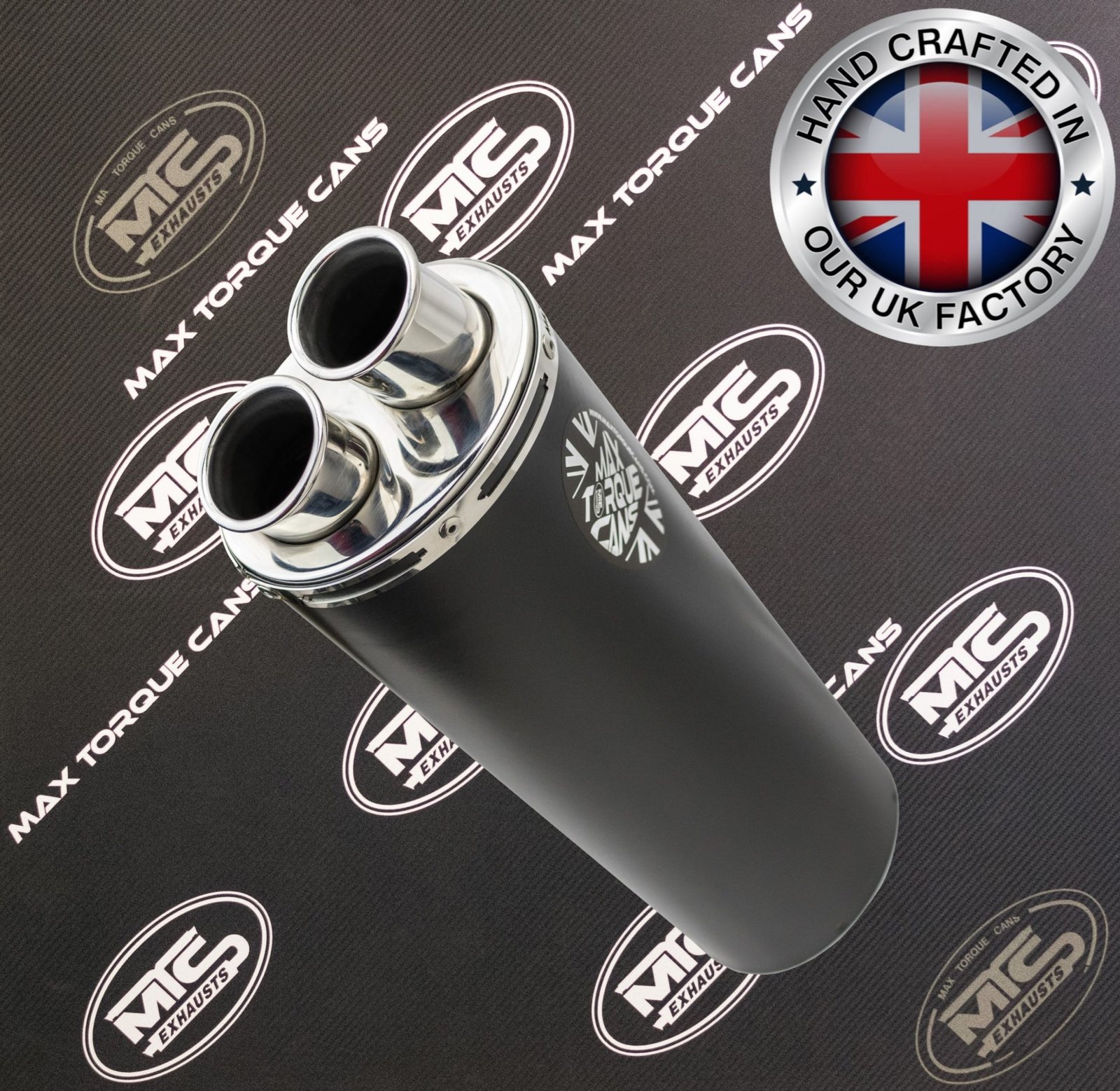


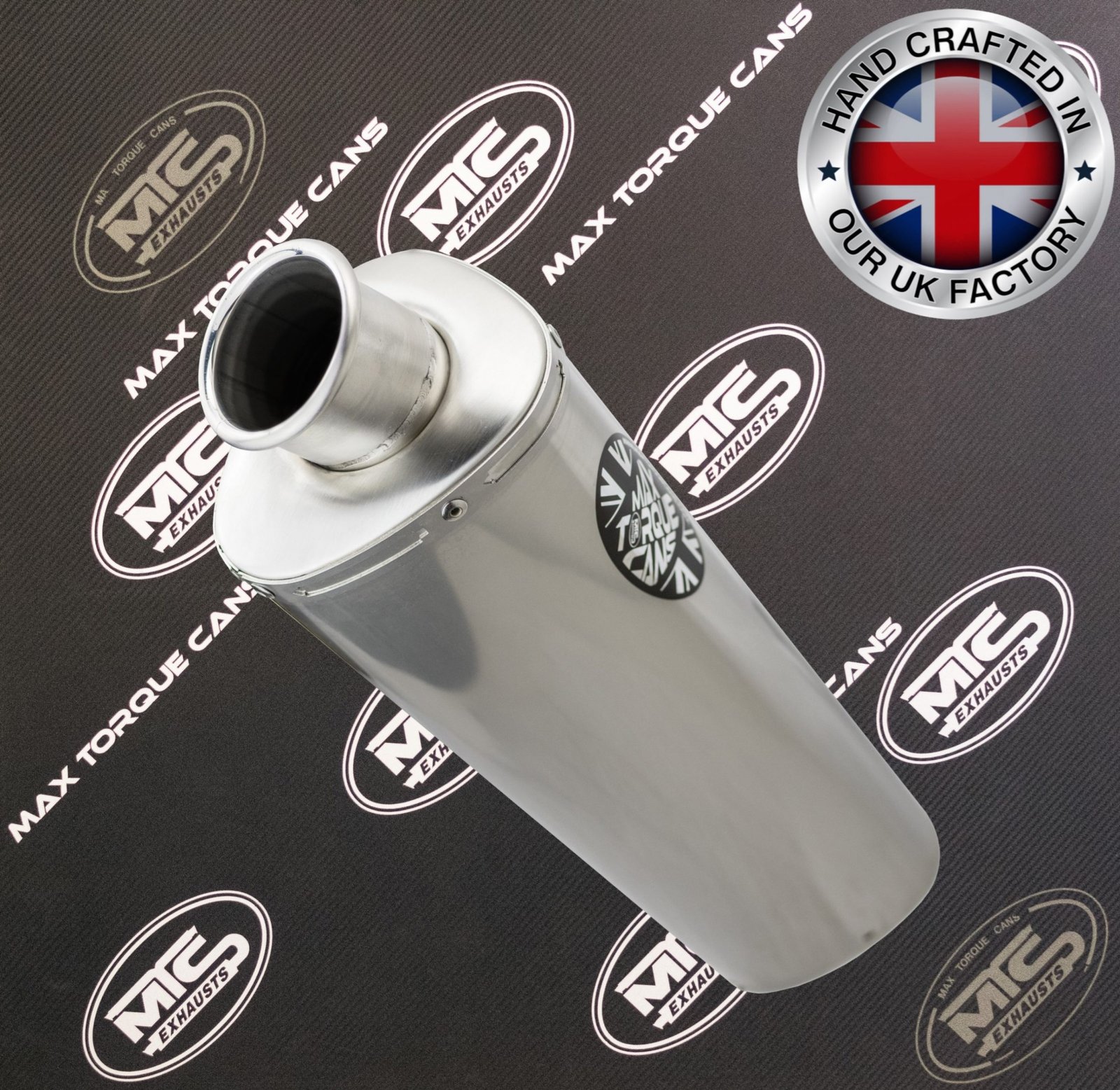

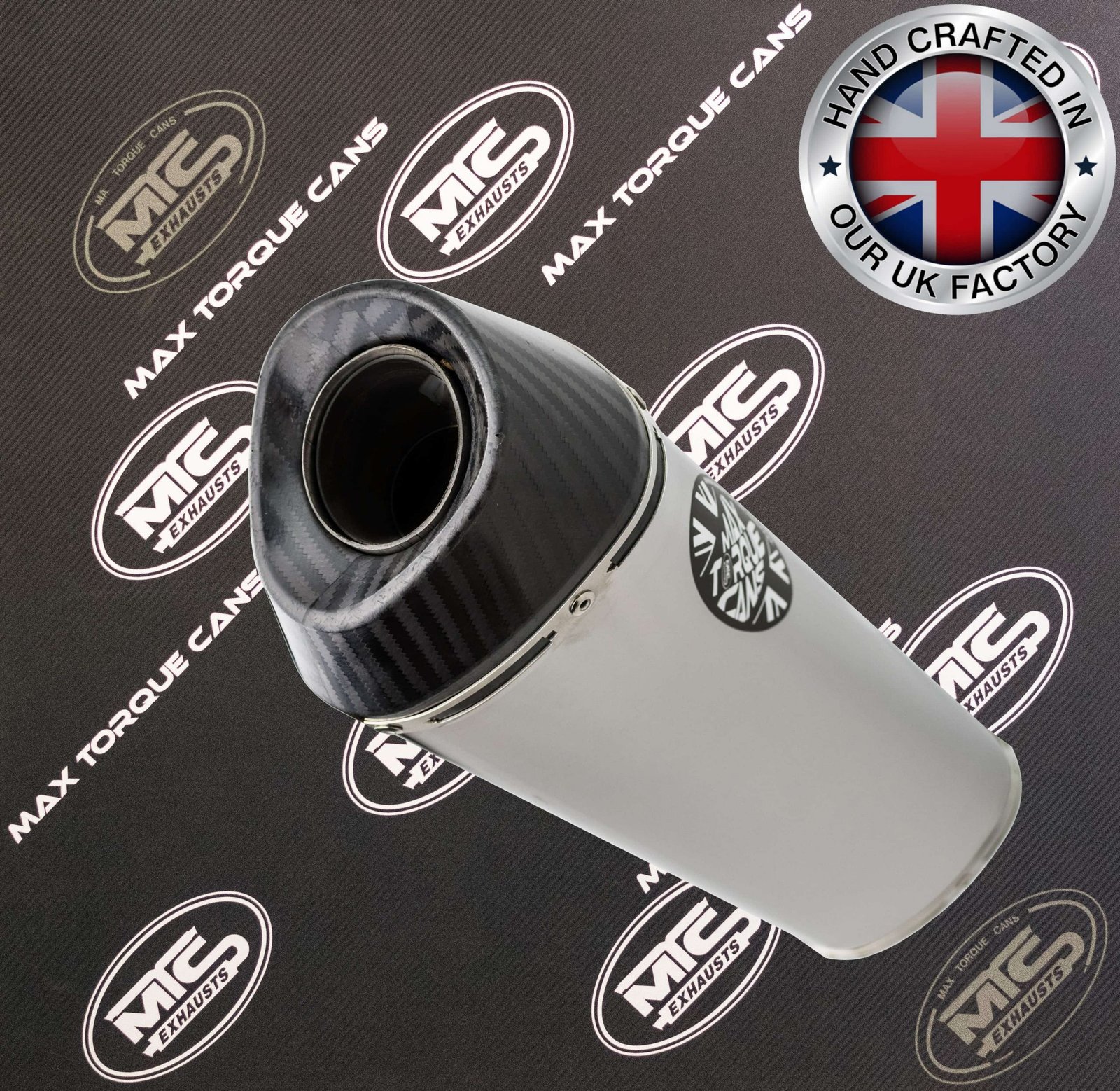





























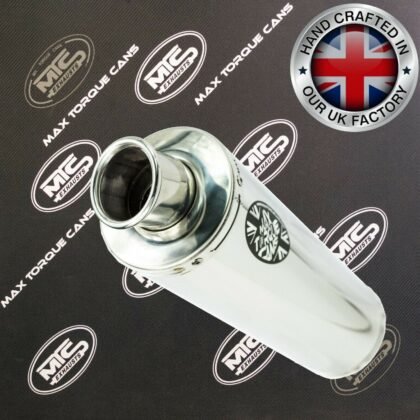


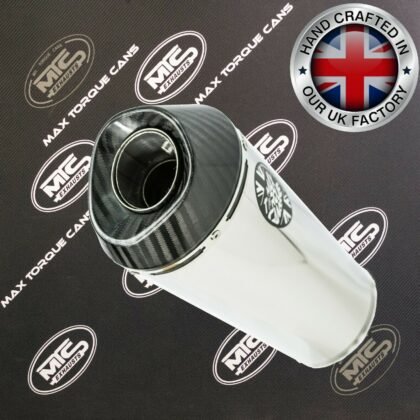
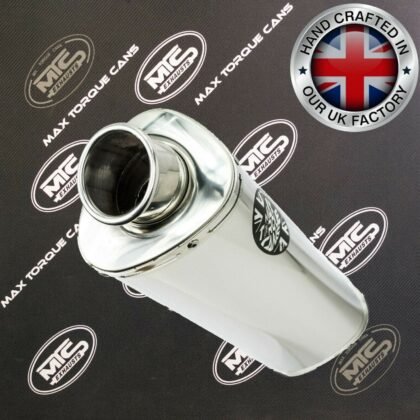

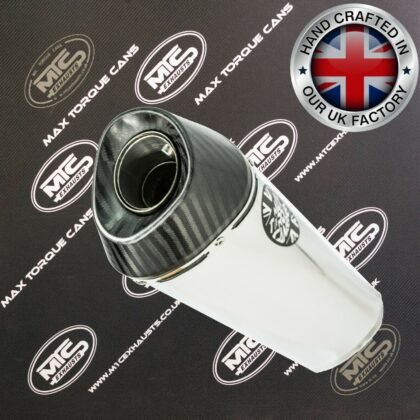
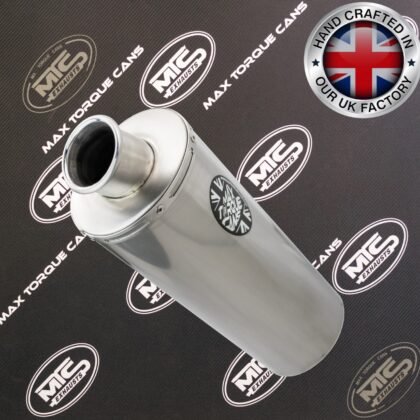

KAWASAKI NINJA H2SX H2SE 2018 – 2020
Price range: £ 137.60 through £ 328.52
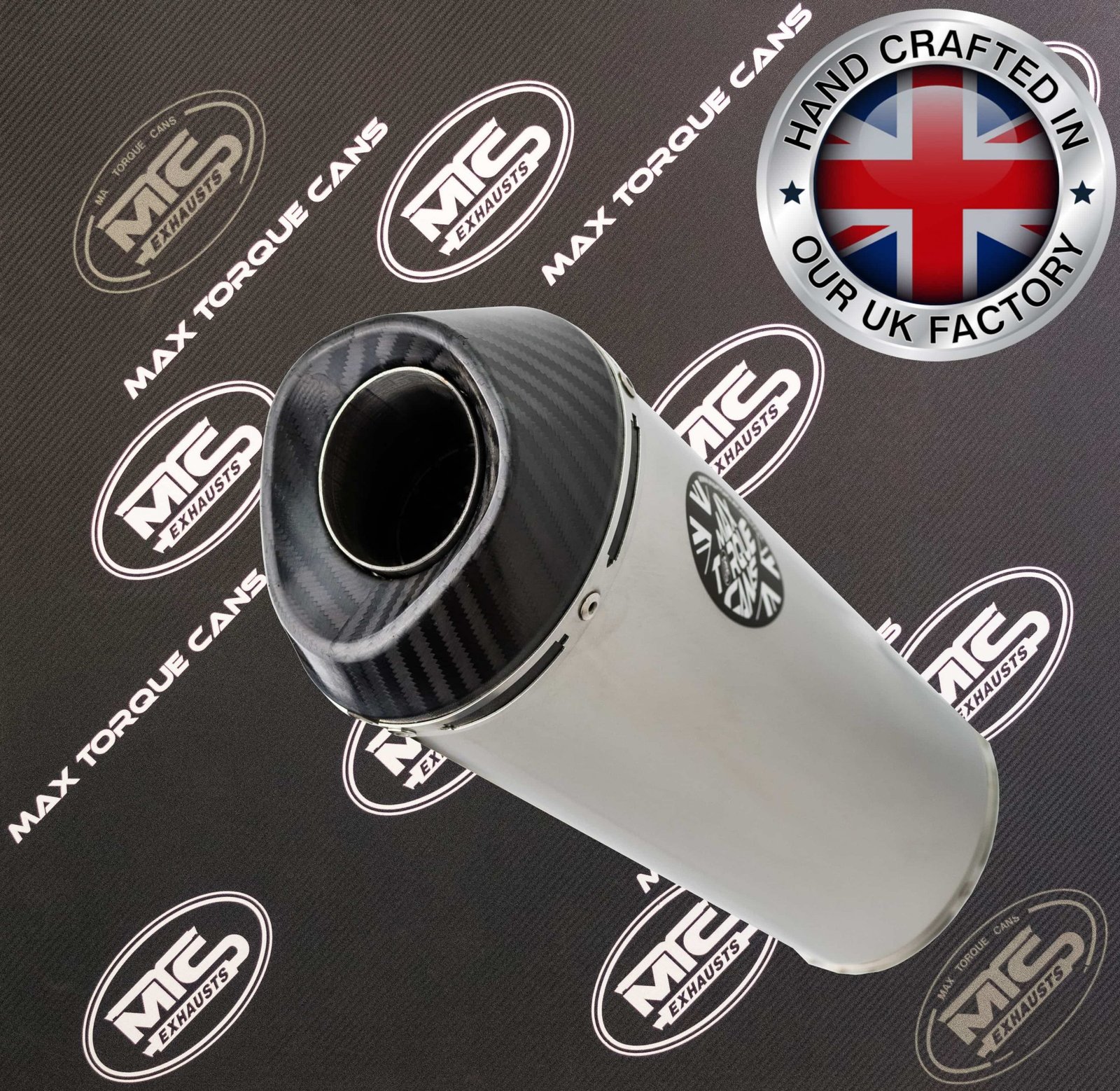
Unlock the full potential of your Kawasaki Ninja H2SX H2SE 2018 – 2020 with our precision-engineered can system. Experience increased power, aggressive sound, and direct OEM fitment without compromise. Built for riders who demand performance from their supercharged sports-tourer.
Table of Contents
The kawasaki ninja h2sx h2se 2018 – 2020 represents the pinnacle of supercharged sports-touring performance, blending Kawasaki’s cutting-edge forced-induction technology with genuine long-distance capability and everyday usability. If you’re seeking to extract even more character, sound, and performance from that ferocious inline-four engine, fitting a high-quality aftermarket exhaust system is hands-down the most rewarding modification you can make.
At Max Torque Cans, we’ve developed a precision-engineered link pipe and silencer fitting kit exclusively for the kawasaki ninja h2sx h2se 2018 – 2020, delivering a direct bolt-on solution that integrates seamlessly with your standard OEM downpipes — no guesswork, no custom fabrication, and absolutely no compromise on quality or fitment.
Whether you’re riding the standard H2SX or the more premium H2SE variant, this kit has been designed with meticulous attention to detail and manufactured to withstand the unique demands of a supercharged motorcycle. We understand that bikes producing this level of power generate extreme heat and vibration, which is why every component in this fitting kit is crafted from premium-grade stainless steel using CNC mandrel bending and precision tooling.
The end result is a product that not only looks the business but also delivers the durability and performance that a machine as sophisticated as the kawasaki ninja h2sx h2se 2018 – 2020 truly deserves.
What’s Included in the Kawasaki Ninja H2SX H2SE 2018 – 2020 Fitting Kit
We believe in delivering complete, ready-to-fit solutions, which is why this kit arrives with everything you need to get your new exhaust system installed and performing perfectly. Here’s the full breakdown of what you’ll receive when you order this product for your kawasaki ninja h2sx h2se 2018 – 2020:
- 1 x Stainless 304 CNC Mandrel Bent Link Pipe — Manufactured from premium 304-grade stainless steel and formed using CNC mandrel bending technology to maintain a consistent internal bore diameter throughout every bend, ensuring smooth, unrestricted exhaust gas flow and a flawless professional finish.
- 1 x Stainless Exhaust Strap — A heavy-duty, corrosion-resistant mounting strap engineered to hold your silencer securely and reliably in position, even under hard acceleration and spirited riding.
- 1 x Exhaust Strap Rubber — Provides essential cushioning and vibration dampening between the metal strap and your silencer body, protecting the finish and reducing mechanical noise.
- 2 x Springs with Hooks — High-tensile springs designed to create a tight, rattle-free connection between the link pipe and your chosen aftermarket silencer, ensuring a secure fit that won’t loosen over time.
Every single component has been selected and tested with longevity, performance, and ease of installation in mind. This isn’t a generic universal fitting cobbled together from off-the-shelf parts — it’s a bespoke kit developed specifically around the exhaust geometry and mounting requirements of the kawasaki ninja h2sx h2se 2018 – 2020 platform.
Precision Engineering for the Kawasaki Ninja H2SX H2SE 2018 – 2020
One of the most critical design decisions we made during development was to keep the link pipe as short as practically possible. This isn’t about cutting corners or saving material — it’s deliberate engineering. By minimising the overall length of the link pipe, we position the exhaust strap closer to the inlet end of the silencer, which delivers a more balanced, secure grip on the can and significantly reduces flex or movement during riding.
This attention to detail helps prevent fatigue cracks and ensures your exhaust system remains solid and dependable mile after mile.
The 304-grade stainless steel used throughout this kit is widely recognised as the benchmark material for performance exhaust components. It offers exceptional resistance to high temperatures, corrosion, and the kind of road salt and moisture that UK riding conditions are notorious for. Whether you’re commuting daily on your kawasaki ninja h2sx h2se 2018 – 2020 or carving through the Welsh mountains at weekends, you need components that can handle everything our climate throws at them.
Equally important is the CNC mandrel bending process employed in manufacturing the link pipe. Unlike cheaper crush-bent alternatives that distort the internal diameter and create turbulence, mandrel bending maintains a perfectly circular bore throughout every curve. This allows exhaust gases to flow freely and efficiently, reducing back pressure and helping that supercharged engine breathe exactly as Kawasaki’s engineers intended.
For more technical insight into exhaust gas flow and performance benefits, Motorcycle News offers a comprehensive guide to motorcycle exhausts that’s well worth reading.
Direct OEM Fitment for the Kawasaki Ninja H2SX H2SE 2018 – 2020
Installation couldn’t be more straightforward. This link pipe is engineered to connect directly to the standard OEM downpipes on the kawasaki ninja h2sx h2se 2018 – 2020, which means there’s no need for additional modification, custom brackets, or specialist tools. If you’re comfortable with basic mechanical tasks and own a decent socket set, you should be able to complete the installation in your own garage without any drama whatsoever.
The spring-and-hook connection system makes fitting and removing the silencer quick and accessible. Should you ever want to swap cans, perform maintenance, or return the bike to standard specification, the process takes minutes rather than hours. It’s a practical, rider-focused design that reflects the fact that we’re motorcyclists ourselves — we know what matters when you’re working in a cold garage on a Sunday morning with limited time and tools.
To help you get the best results, we’ve created a full series of step-by-step video guides available on our YouTube channel. We strongly recommend watching these before you begin your installation — they’ll save you time, answer common questions, and give you the confidence that everything is going together exactly as it should for your kawasaki ninja h2sx h2se 2018 – 2020.
Frequently Asked Questions — Kawasaki Ninja H2SX H2SE 2018 – 2020
Will this fit both the H2SX and the H2SE models?
Yes, absolutely. This link pipe and fitting kit is designed to work with both the standard Kawasaki Ninja H2SX and the higher-specification H2SE variant covering the 2018, 2019, and 2020 model years. Both bikes share identical OEM downpipe configurations, so fitment is the same across the entire range.
Do I need to remove the standard downpipes?
No — this kit is designed to connect directly to your existing standard downpipes. Simply remove your original silencer, attach the link pipe to the OEM downpipe junction, and secure your chosen aftermarket can using the supplied strap, rubber, and springs. It’s a clean, non-destructive installation that allows you to return your kawasaki ninja h2sx h2se 2018 – 2020 to standard specification at any time.
What silencer or can is compatible with this link pipe?
This link pipe is designed to work with a wide range of aftermarket silencers and performance cans. If you’re unsure about compatibility with a specific brand or model, please get in touch with us directly and we’ll be happy to advise. We want to make sure your kawasaki ninja h2sx h2se 2018 – 2020 sounds and performs exactly as you’re hoping.
Is the stainless steel suitable for year-round UK riding?
Absolutely. The 304-grade stainless steel used throughout this kit offers excellent resistance to corrosion, making it ideally suited to the wet, salty conditions that UK roads can throw at a motorcycle. It’s the same material used in demanding marine and industrial applications — more than capable of handling everything our weather can deliver.
Where can I see photos and videos of the finished installation?
We maintain a full photo album on our Flickr page and a dedicated playlist of installation and sound videos on our YouTube channel. These cover multiple angles and stages of the fitting process, so you can see exactly how the finished result looks and sounds on the kawasaki ninja h2sx h2se 2018 – 2020 before you commit to your purchase.
If you’re exploring exhaust upgrades across the Kawasaki range, you might also be interested in our Kawasaki Z650 RS Stainless De-Cat System & Rear Silencer or our precision-engineered solution for the Kawasaki ZX-4RR 2024 — both excellent examples of our commitment to quality stainless fabrication and rider-focused design.
At Max Torque Cans, every product we sell is designed, developed, and built with genuine passion for motorcycles and motorcycling. The kawasaki ninja h2sx h2se 2018 – 2020 is a world-class machine that deserves equally world-class components, and that’s exactly what we’ve set out to deliver. Order with complete confidence, and if you have any questions at all before you buy, our team is always on hand to help.
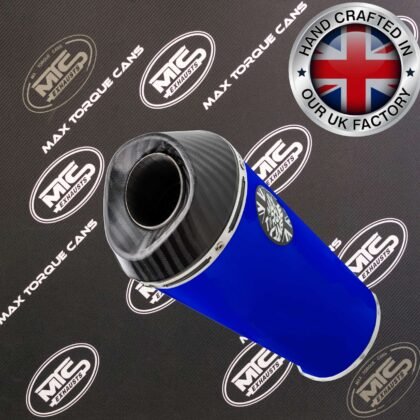
| Material | White, Polished Stainless Steel, Satin Stainless Steel, Titanium, Carbon, Black, Blue |
|---|---|
| Shape | Round GP, Oval, Round, Tri Oval |
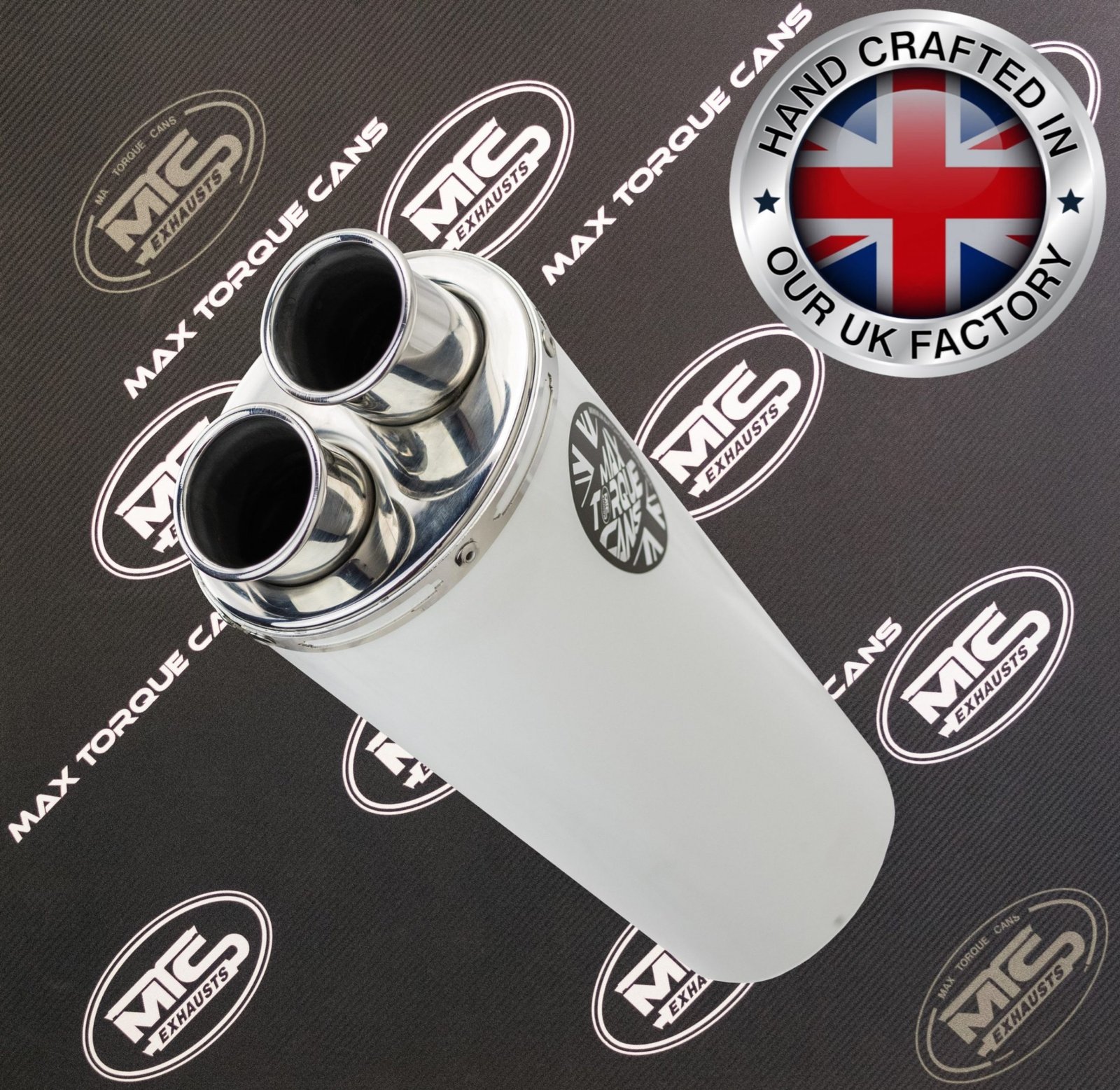
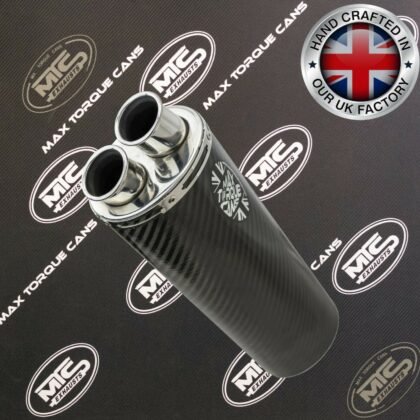
| Outlet | Evo Outlet, GP Pro Outlet, Single Outlet, Twin Outlet, Carbon Outlet |
| Type | Race, Road Legal |
Outlet
 |
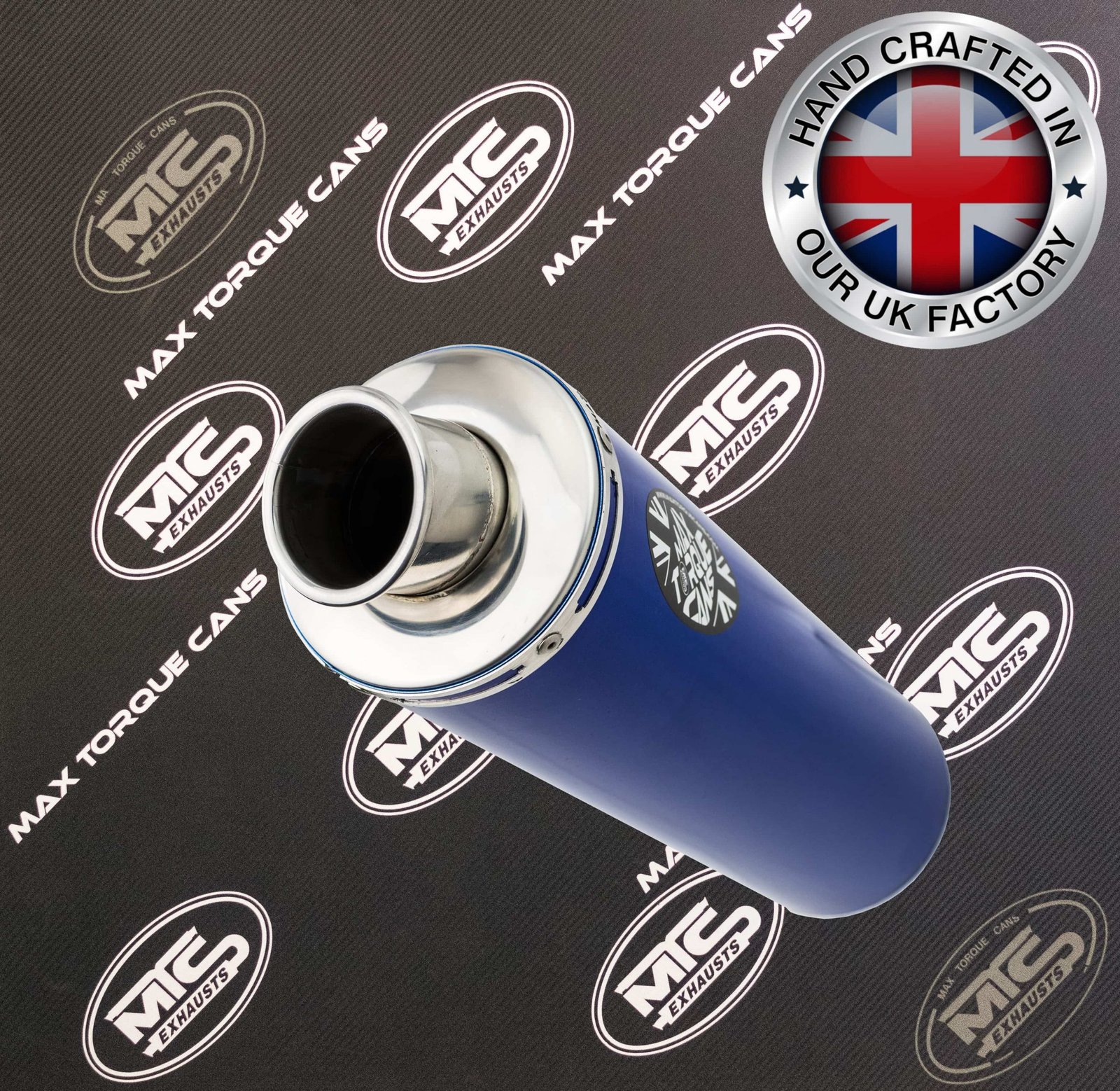
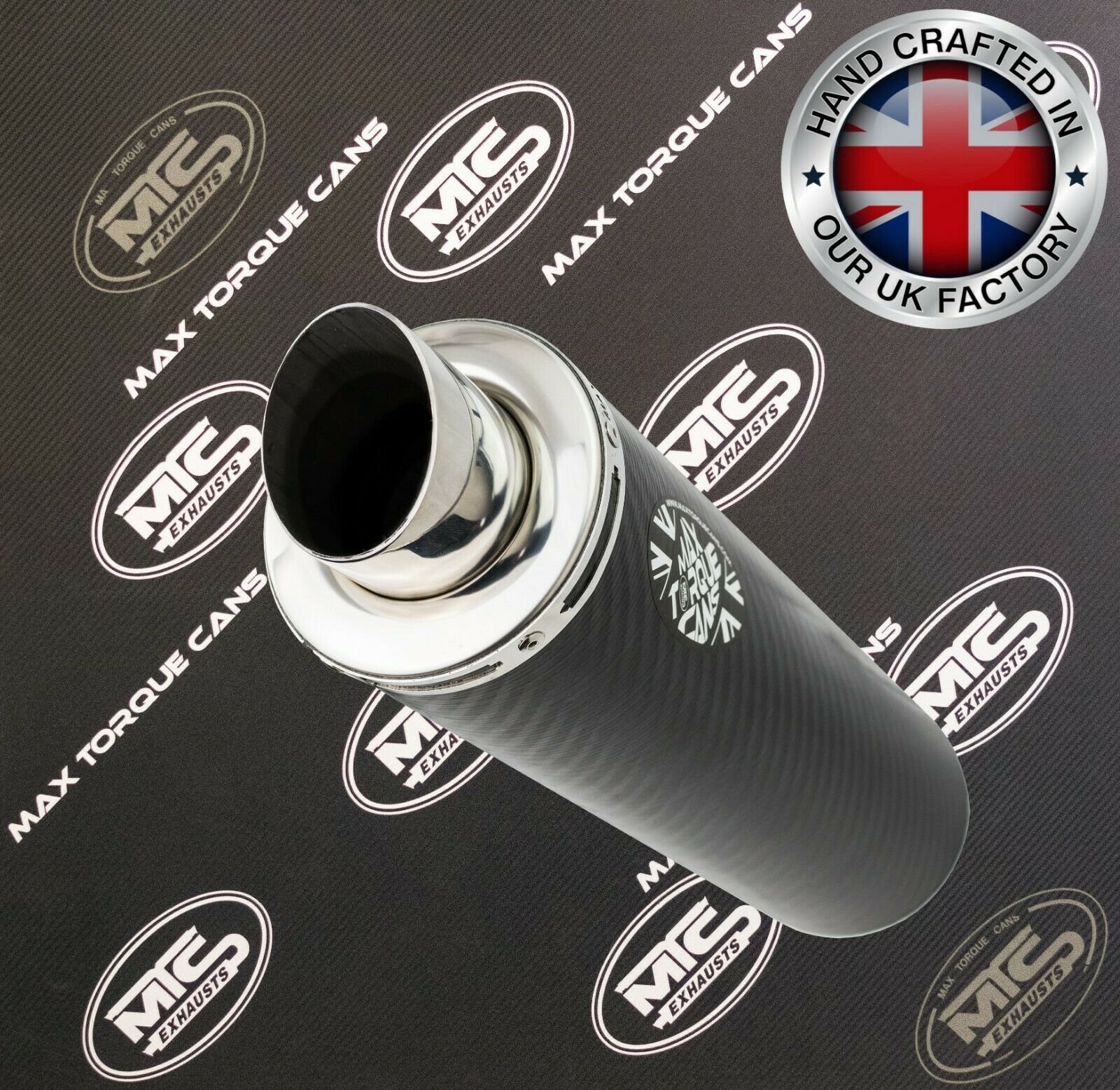
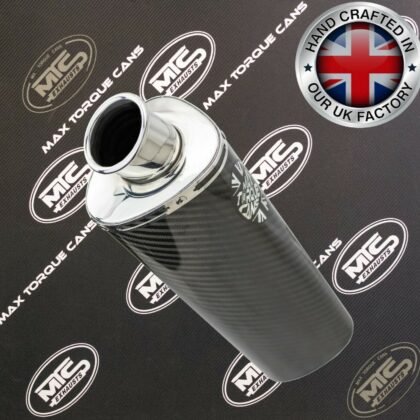
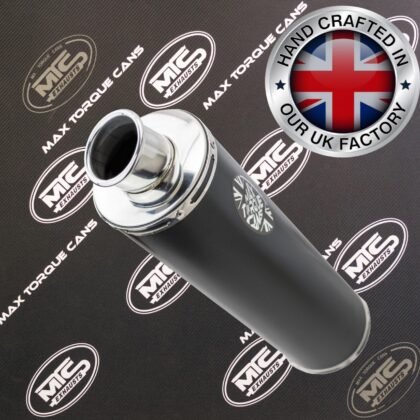
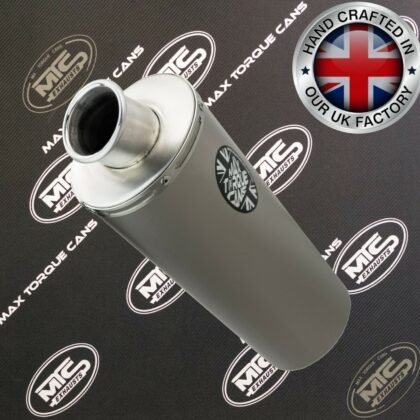
Single Outlet – single 54mm diameter rolled outlet. Best performing outlet in a road-legal /race. Simple and effective. |
 |
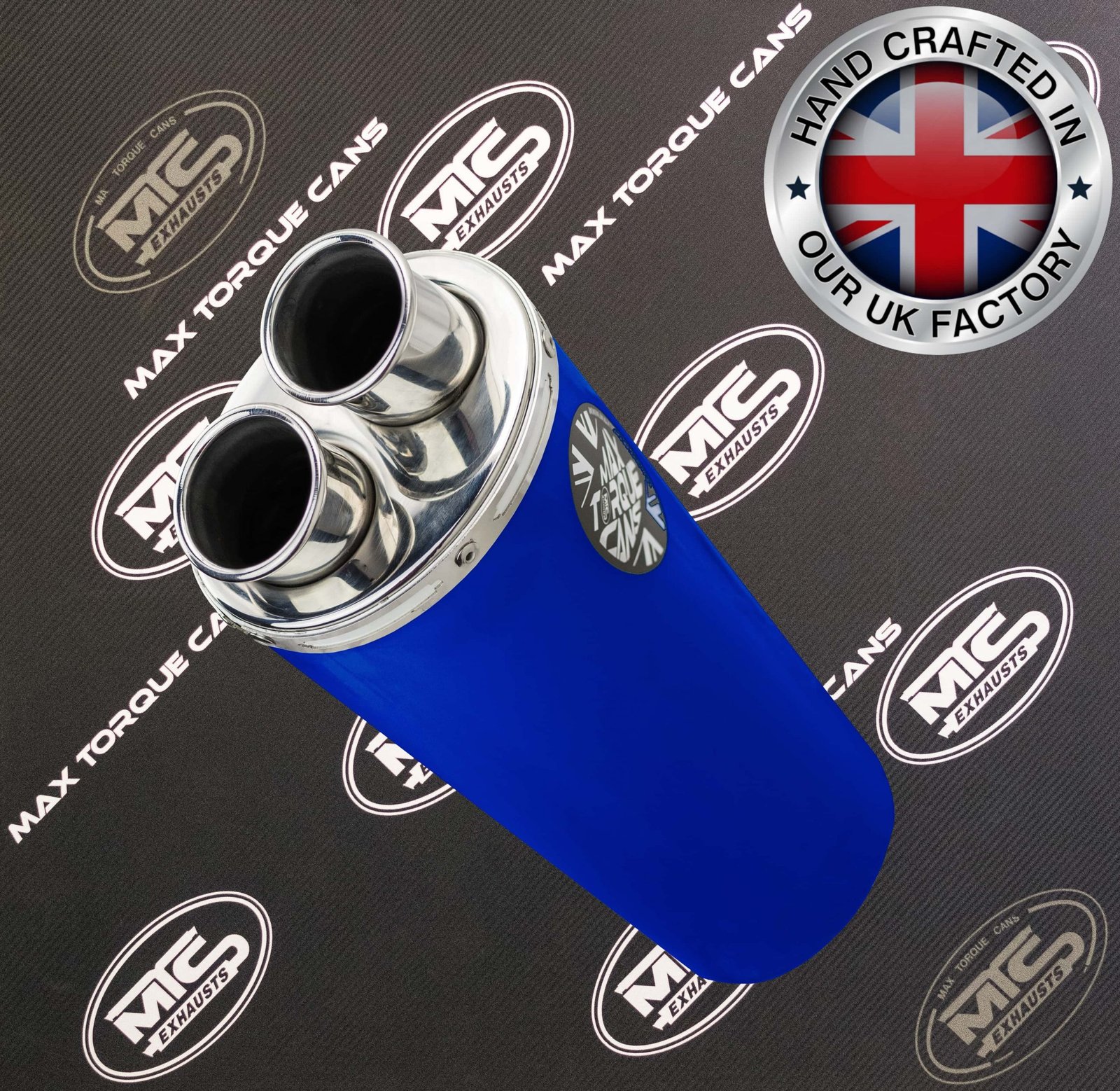
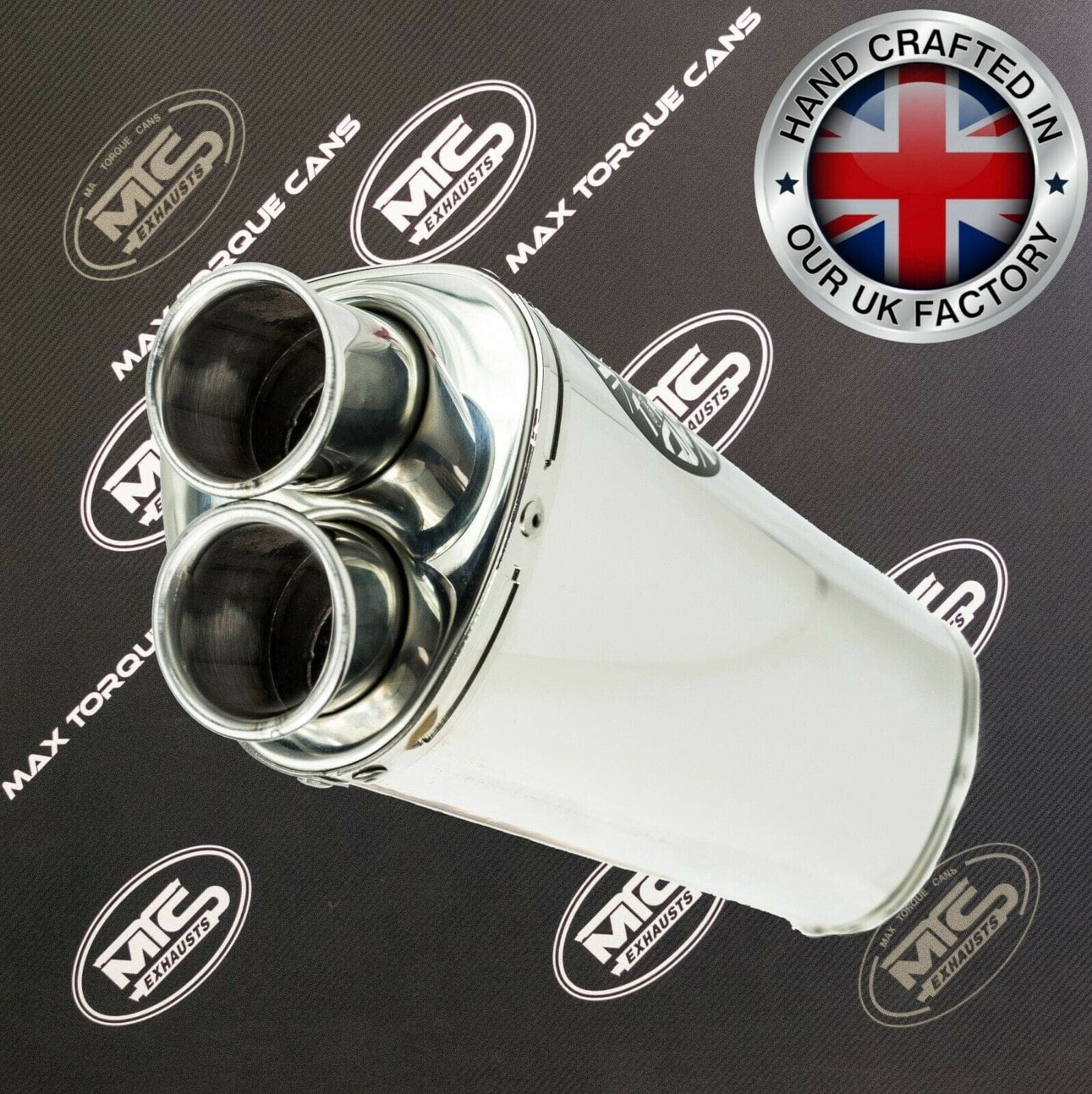
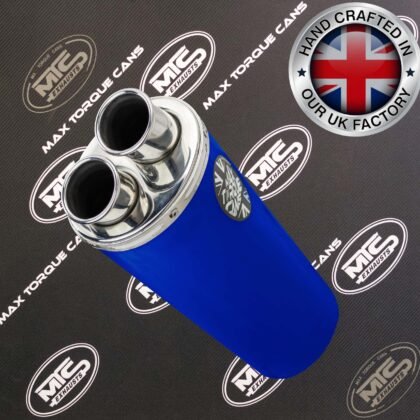
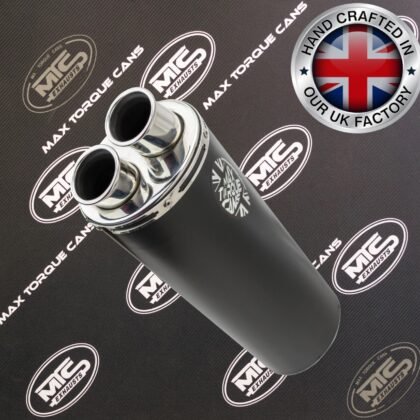
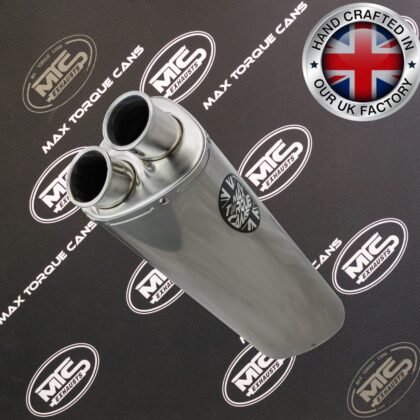
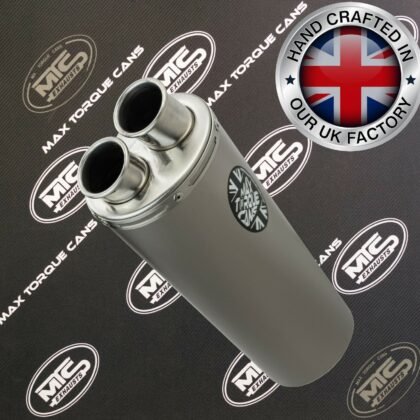
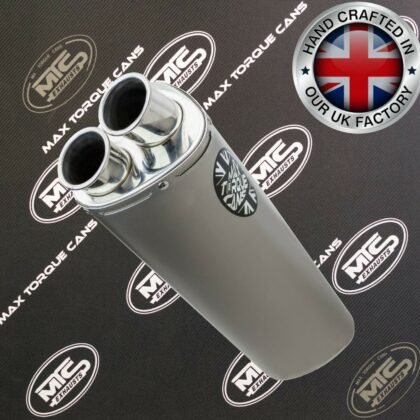
Twin Outlet – twin 40mm diameter rolled outlets. This has the ‘best of both worlds’, quieter than the single outlet with baffles inserted, and Louder than the single outlet with the baffles removed. (Both outlets working in the road-legal form). |
 |
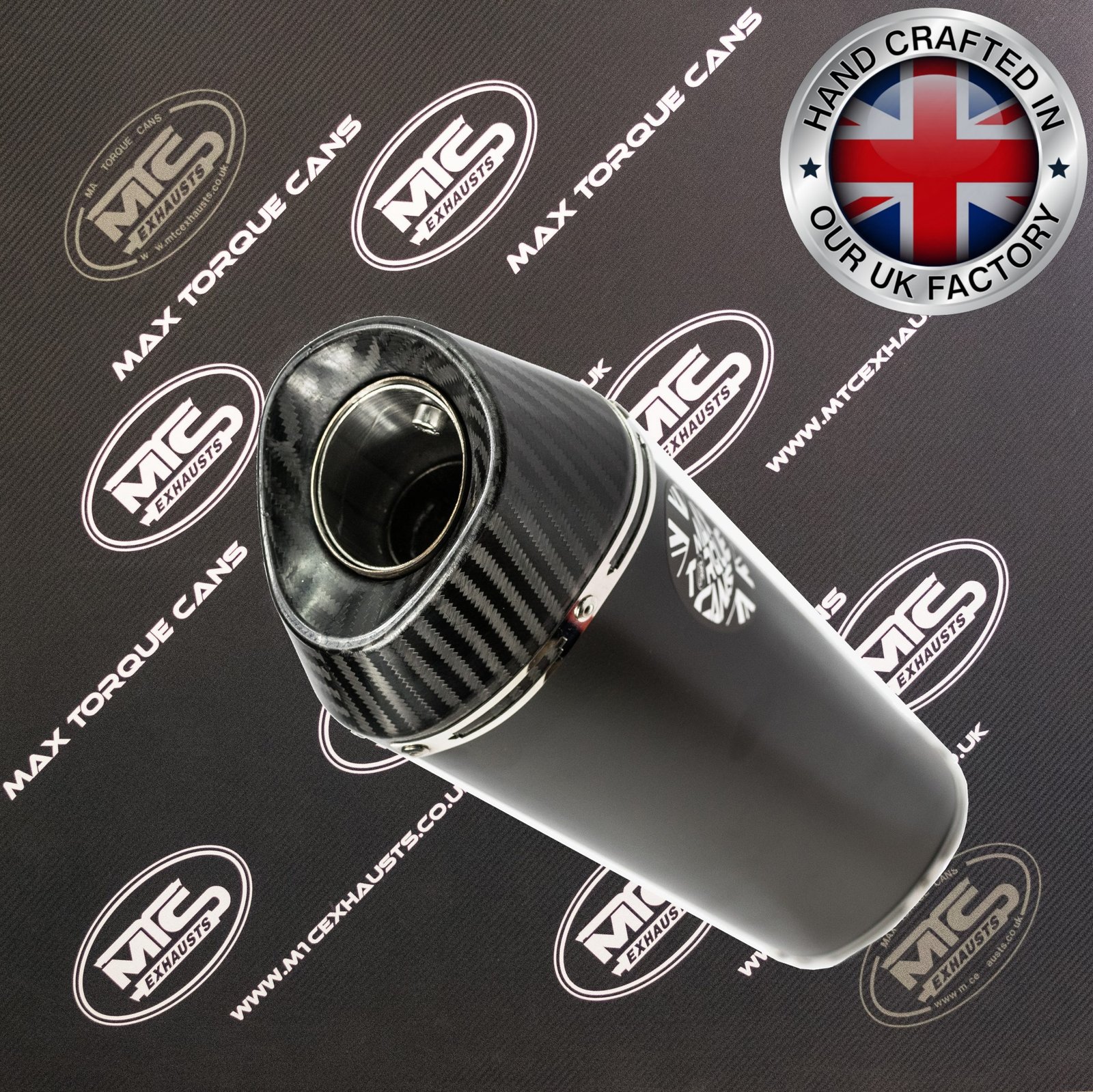
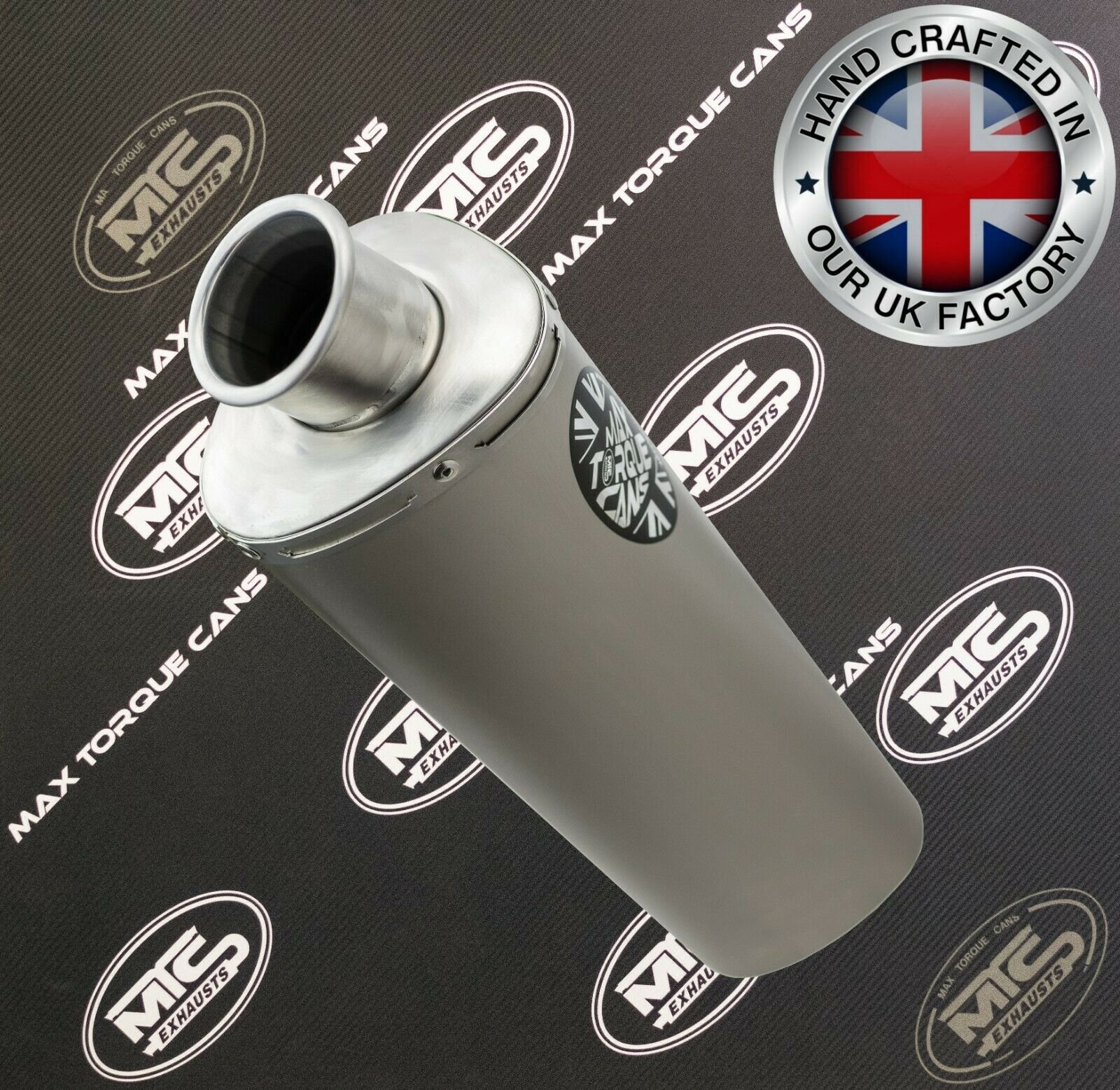
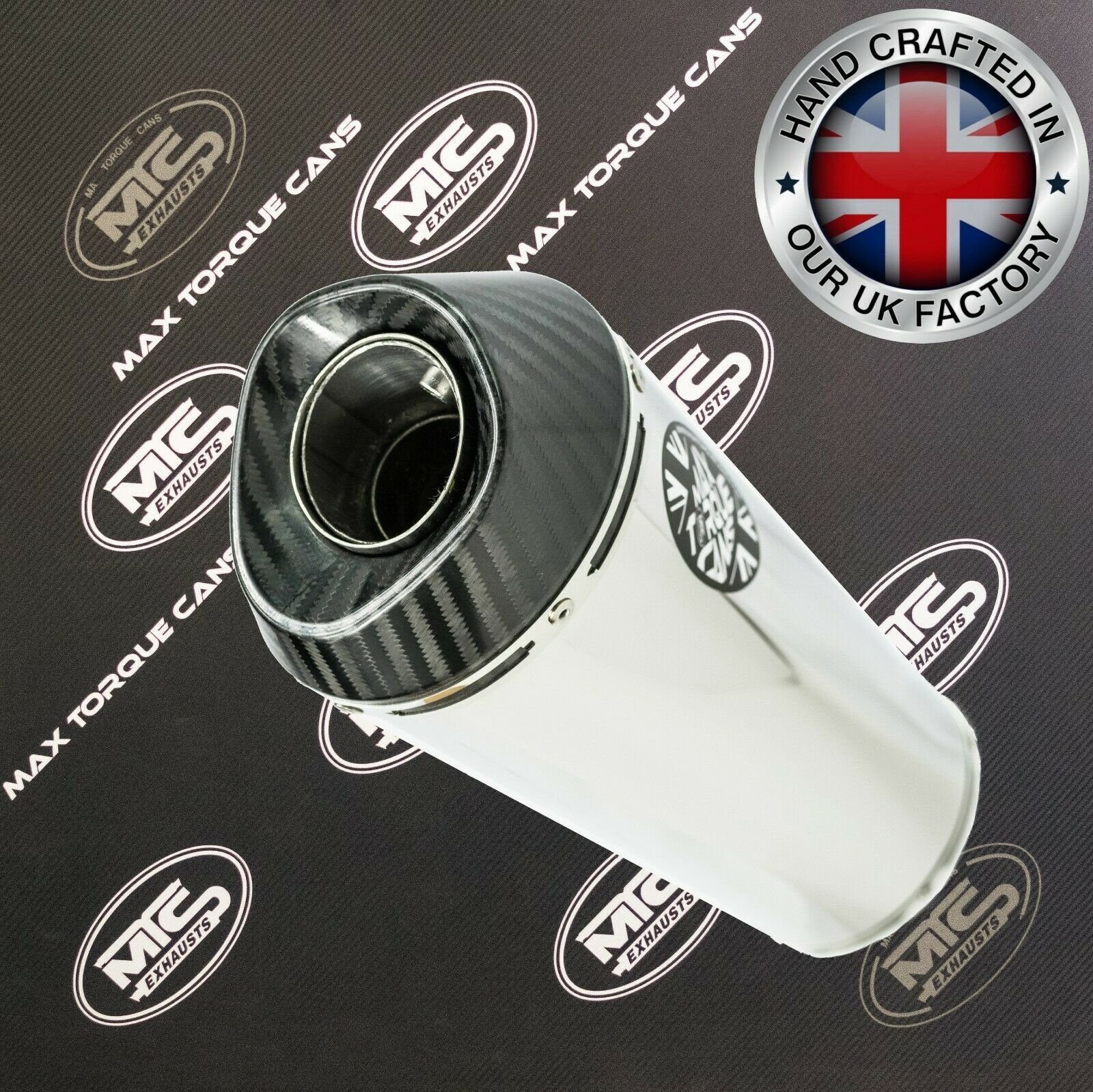
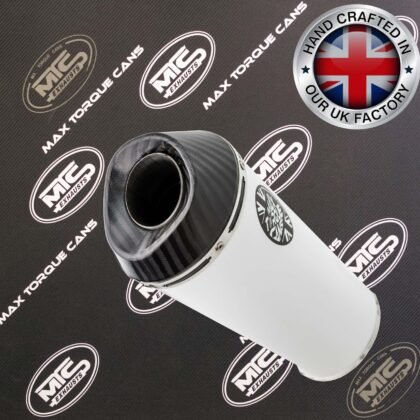
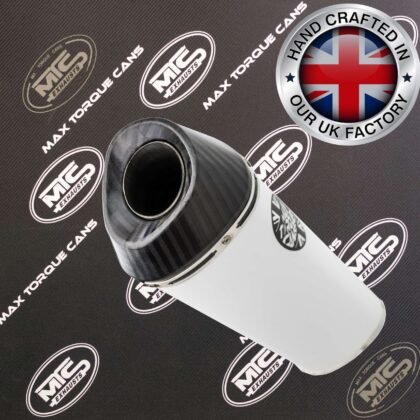
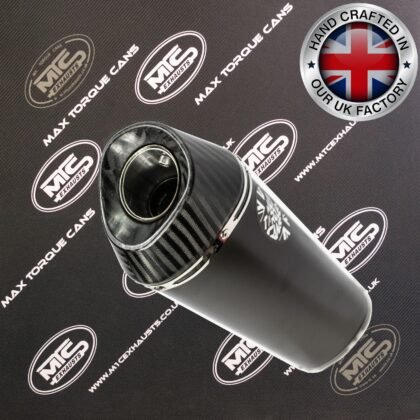
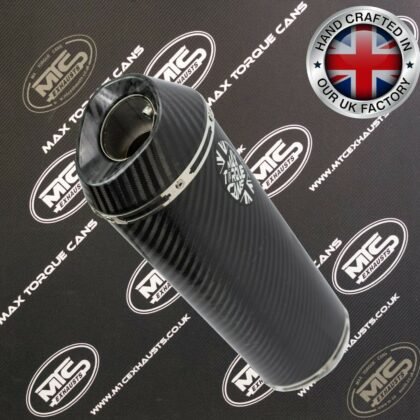
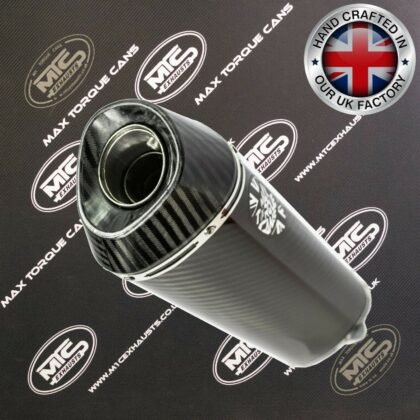
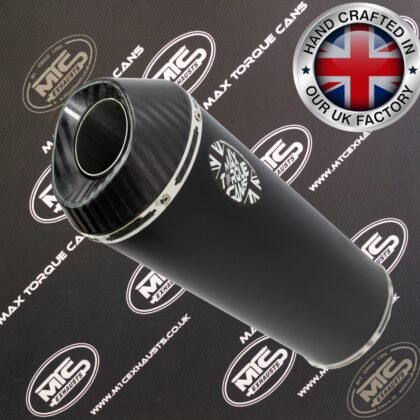
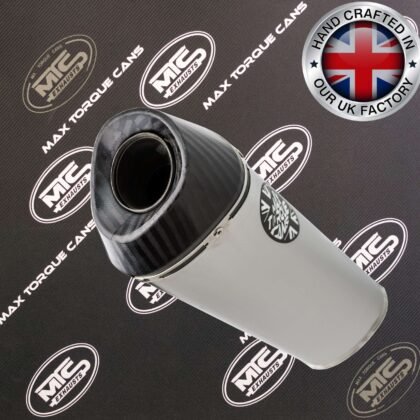
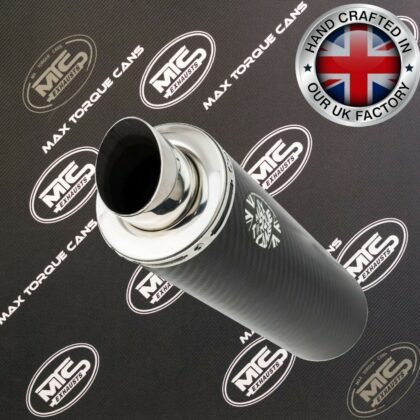
Carbon Outlet -Our superior outlet range with a choice of a smooth, sleek Oval, ultra-modern Tri-oval, and now our all-new for 2020 Round outlet. These outlets give your exhaust the distinctive, expensive finish without the expensive price tag. |
 |
GP Pro Outlet – Comes with a large 63mm diameter slash-cut finish, and can come with and without road-legal baffles. |
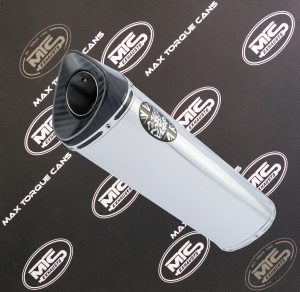 |
The Evo Outlet – Is a new, modern 2020 design. The sleek, tapered lines compliment any road – track or race bike |
Materials
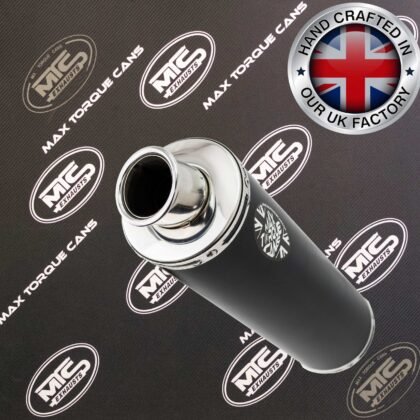
Our Exhausts are internally constructed in stainless steel and the outer sleeve can be made in stainless steel, titanium or carbon fiber. MTC ONLY uses the best grade materials.
 |
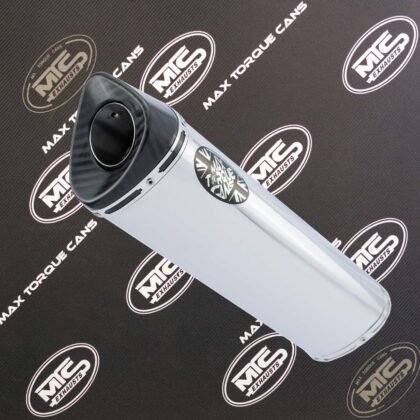
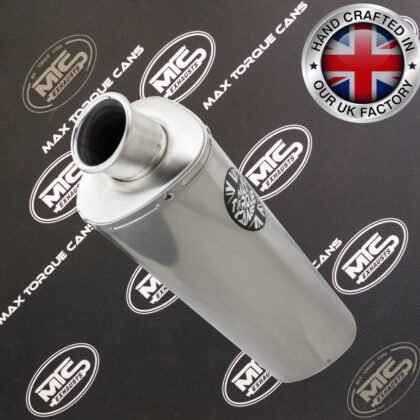
Polished Stainless Steel – Grade T304 + T409 (a single slip-on exhaust normally weighs 1.9 kilos). |
 |
Satin Stainless Steel – Grade T304 + T409 (a single slip-on exhaust normally weighs 1.9 kilos). |
 |
Titanium – Grade 2 + 3 mill finish (a single slip-on exhaust normally weighs 1.7 kilos). |
 |
Carbon Fibre – 4 x 4 twill prepreg autoclave cured, foiled lined (a single slip-on exhaust normally weighs 1.2 kilos). |
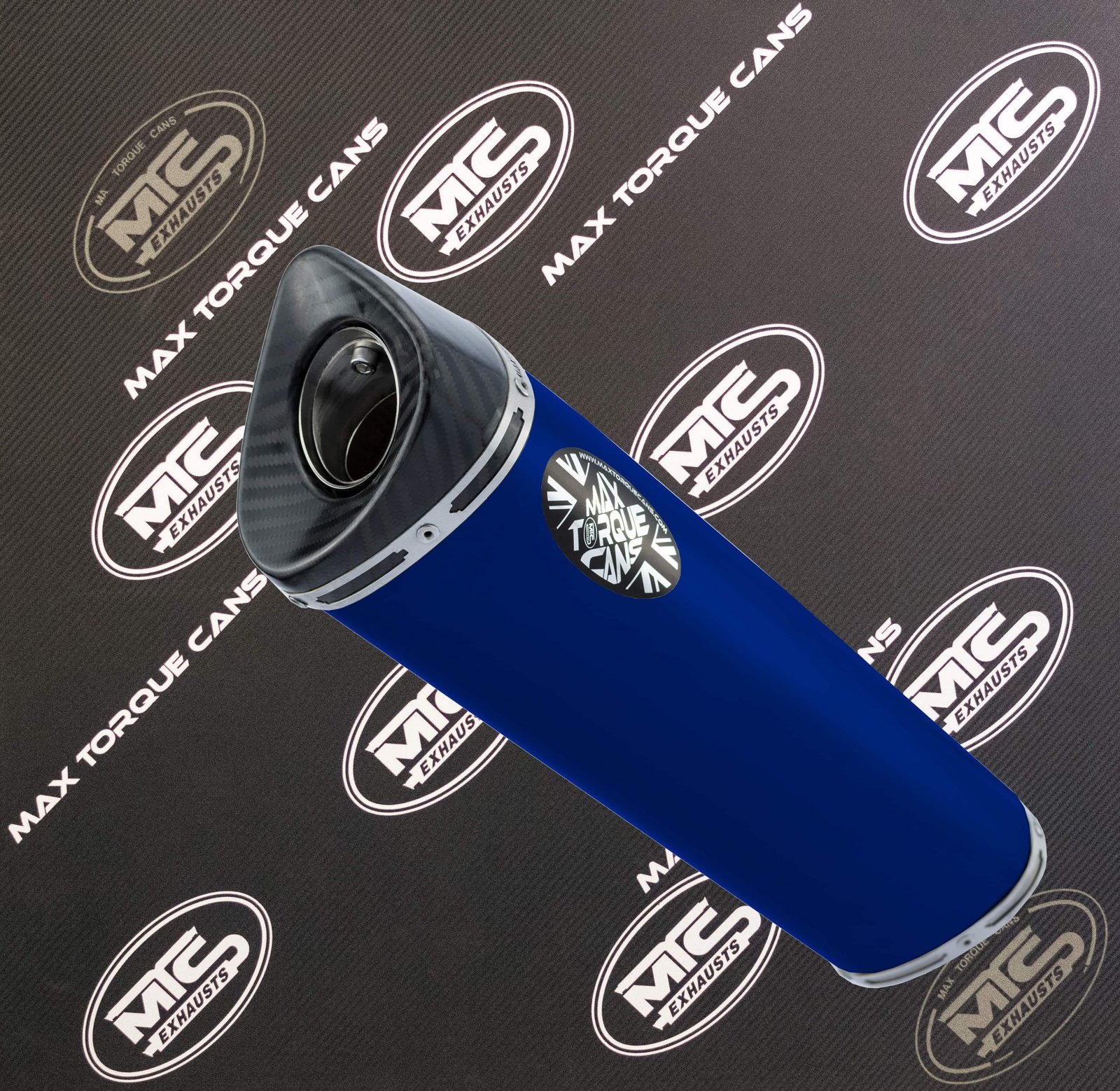
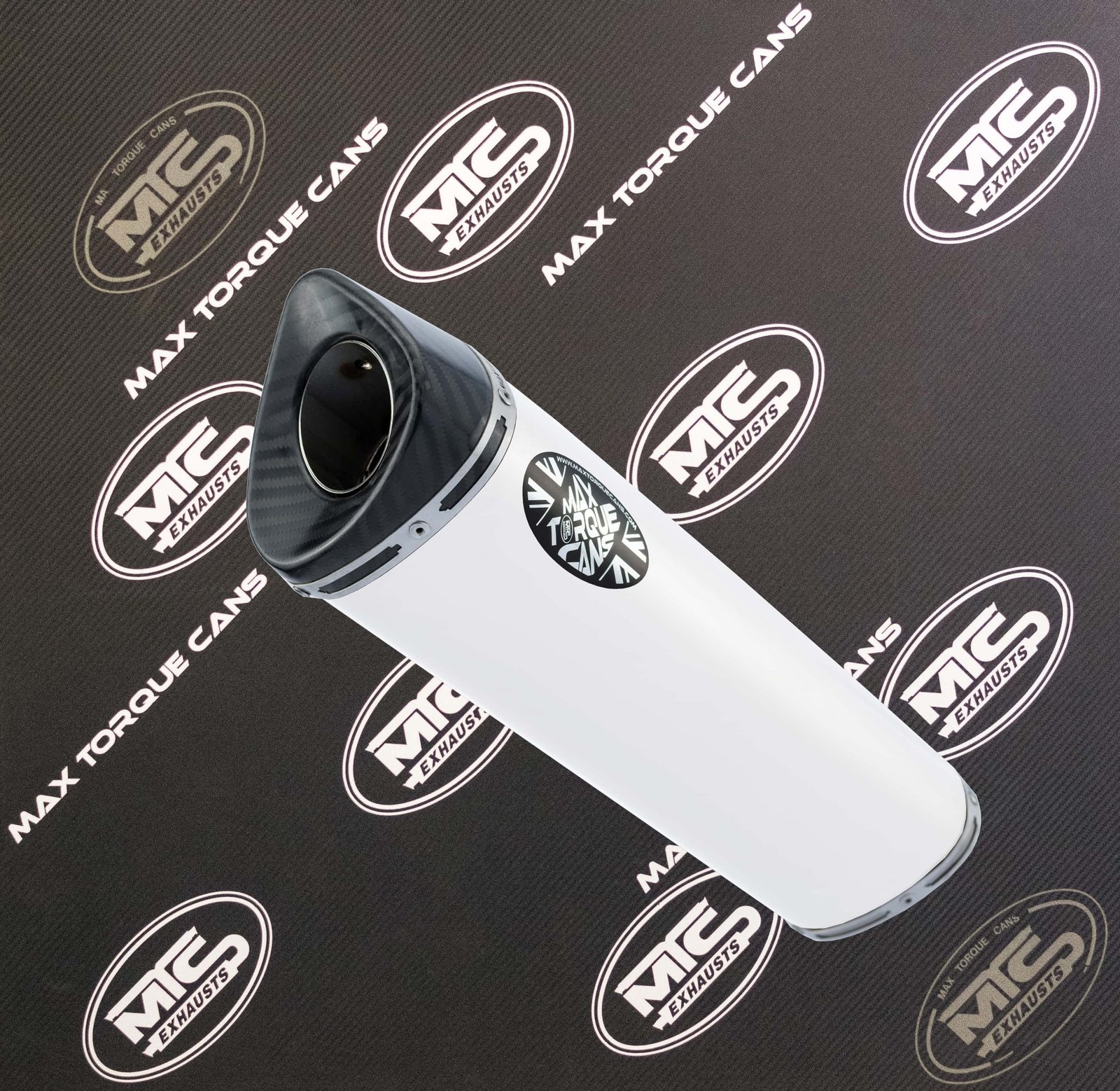
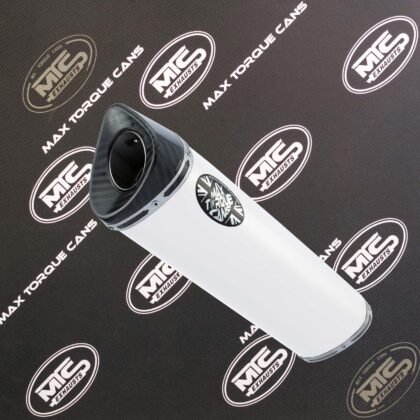
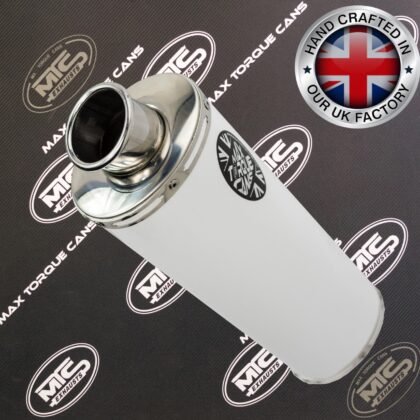
Our coloured exhausts have stainless steel sleeves that are painted prior to assembly. The item is electrostatically coated with high-grade polyester powder and cured at 200º-220º deg C giving a durable, smooth and U.V. resistant finish with excellent colour retention. Colours available are matt black, gloss white and gloss blue.
Shape
 |
Round GP – Ø98mm Our smaller round exhaust shape and is usually 250mm Long (this exhaust shape is perfect for the customer who wants a louder sound on a standard sized bike). |
 |
Round – Ø110mm Our Normal-sized exhaust shape and can come in sizes from 250mm to 450mm Long. (This is our standard sized exhaust and performs excellently on most bikes). |
 |
Oval – working from 110mm Ø is sized 98mm wide and 122mm High and can come in sizes from 250mm to 450mm Long. (This is our slimmest design, for inverted under-seat exhausts, or for customers/Racers who need the slimmest streamlined spacers to ride through). |
 |
Tri Oval – working from 110mm Ø is sized 98mm wide and 122mm High and can come in sizes from 250mm to 450mm Long. (This is our Premium shaped design. (Designed back in 2002′ our company was the first in the UK to produce this exclusive shape, have a look around and see how many UK companies have copied us!!). |
Extra Info
Our Exhausts are manufactured to give maximum power without the need to alter the fueling but, if you have an aftermarket air filter and/or a de-cat, then having the bikes fueling looked at will always compliment the engine’s performance and efficiency.
To Make sure that you are shopping for the correct Model exhaust here is some information about this model.
Manufacturer Kawasaki Motorcycle & Engine Company
Parent company Kawasaki Heavy Industries
Production 2018–present
Class Street-legal sport tourer bike
Engine Supercharged (two-speed centrifugal) 998 cc inline-4 DOHC
20.5 PSI boost
Bore / stroke 76×55 mm
Compression ratio 8.5:1
Top speed 337.06 km/h (209.442 mph)
Power (2015-2018) 141.5 kW (189.8 hp) (rear wheel)
150 kW (200 hp)(claimed)@11,000 rpm
(2019-) 170 kW (228 hp) (claimed)
Torque 123.7 N⋅m (91.2 lb⋅ft) (rear wheel)
133.5 N⋅m (98.5 lb⋅ft)(claimed) @10,500 rpm
Transmission 6-speed
Frame type Steel trellis
Suspension Front: 43 mm telescopic fork, preload adj.
Rear: Single shock, preload adj.
Brakes Front: 2×330 mm disc
Rear: 250 mm disc
Tires Front: 120/70ZR17
Rear: 200/55ZR17
Rake, trail 24.5°, 4 in (100 mm)
Wheelbase 1,450 mm (57.1 in)
Dimensions L: 2,090 mm (82.1 in)
Seat height 32.5 in (830 mm)
Weight 529.0 lb (240.0 kg) (wet)
Below is information on the related Sportsbike Ninja H2R
The Kawasaki Ninja H2 is a “supercharged supersport” class motorcycle in the Ninja sportbike series, manufactured by Kawasaki Heavy Industries, featuring a variable-speed centrifugal-type supercharger. The track-only variant is called Ninja H2R, and it is the fastest and most powerful production motorcycle on the market; it produces a maximum of 310 horsepower (230 kW) and 326 horsepower (243 kW) with ram air. The H2R has 50% more power than the fastest street-legal motorcycles, while the street-legal Ninja H2 has a lower power output of 200 hp (150 kW)–210 hp (160 kW) with ram air.
H2R top speed
James Hillier’s H2R (by Quattro Plant/Bournemouth Kawasaki) Tyre warmers were electrically heated before the demonstration run.
2015
In June 2015, TT race competitor James Hillier rode a Kawasaki H2R as an inter-race demonstration lap, at near-race speeds, using normal Superbike slick race tires, around the 373⁄4-mile road course, leading to a roads TT record of the highest top speed attained in the Isle of Man by a motorcycle. The top speed of “over 206 mph” (332 km/h) on the Sulby Straight was recorded on Hillier’s personal Strava GPS smartphone app for cyclists.
2016
On June 30, 2016, Kenan Sofuoglu, a five-time world champion Supersport circuit-racer, made a top speed attempt. Kawasaki supplied a stock H2R, other than special-formula rubber tires developed by Pirelli for the top speed attempt to withstand extremely high speeds, and the bike was supplied with race-grade fuel. Sofuoglu was supplied with a special one-piece leather suit to enhance aerodynamics for his record attempt.
This attempt, with the Turkish president in attendance, was made across the then-newly completed Osman Gazi Bridge, the fourth-longest in the world at just over a mile and a half. Kawasaki quoted the H2R maximum speed to be 380 kilometers per hour (240 mph). After training and preparing for four months, a speed of 400 kilometers per hour (250 mph) in just 26 seconds was claimed by a video-recording of the bike’s dashboard display.
The speed was not officially confirmed or independently verified. No fixed point optical sensors for distance/speed calculations, chronometers, or hand-held devices were used, and later with a theoretical calculation,[29] of the distance, he traveled in 26 seconds on the 8,799-foot-long (2,682 m) bridge. Cycle World’s Kevin Cameron had calculated two years earlier than with the right gearing, the H2R’s engine power could theoretically overcome aerodynamic drag up to 250–260 miles per hour (400–420 km/h).
The street-legal Ninja H2 has rear-view mirrors in place of the track-only H2R’s wings. It also has plastic body panels in place of the H2R’s carbon fiber. The street-legal bike is said to make 200 horsepower (150 kW), probably with reduced supercharger boost compared to the H2R. The H2 and H2R share the supercharger (with a lower boost level on the H2) and many other components, with the exception of the head gasket, cam profile, and timing with ECU mapping, and exhaust system, as well as the R’s clutch, has two additional plates.[1] Cycle World recorded a
1/4 mile time of 9.62 sec. @ 152.01 mph (244.64 km/h) with a 0 to 60 mph acceleration at 2.6 seconds and a top speed of 183 mph (295 km/h). Kent Kunitsugu, editor for Sport Rider magazine, competing in a land-speed racing event in Mojave, California at the Mojave Air and Space Port airfield in the Mojave Magnum land-speed racing, took a Ninja H2 with just a few bolt-on performance parts adding over 70 horsepower and achieved a top speed of 226.9 mph (365.2 km/h).
For 2017, Kawasaki made a limited-edition model with 120 units produced globally: the individually-numbered Kawasaki Ninja H2 Carbon with special paint and carbon-fiber upper cowl. For 2017, the standard model Kawasaki Ninja H2 is also updated
For 2018, Kawasaki made a new sport touring version of the H2, the Kawasaki H2 SX, with a claimed wet weight of 256.1 kg (564.5 lb). Features that are options on the base model H2 SX come standard on the Kawasaki H2 SX SE, which has a claimed wet weight of 260.0 kg (573.3 lb). With revised throttle bodies, camshafts, crankshaft, pistons, cylinder, and cylinder head as well as a new exhaust system aimed at increasing mid-range torque. The intake system and supercharger impeller were also redesigned. A new larger fuel tank, rear trellis subframe, and panniers increase the bike’s weight by 19 pounds (8.6 kg).
For 2019, the H2 received an update with 15 percent more power from updates to the intake, plugs, ECU, air filter, and more. There is new all LED lighting and a special topcoat on the paint that is claimed to be self-healing, which in warmer conditions, is able to smooth over small scratches. Also new are lighter and smaller Brembo Stylema calipers, a new TFT dash, plus smartphone connectivity that gives vehicle information about GPS route information, speed, rpm, gear position, fuel mileage, fuel level, and odometer. In addition, the 2019 H2 SX SE+ version features Electronic Control Suspension.
Speed record
On August 12, 2018, rider Shigeru Yamashita with an unofficial team of Kawasaki employees (known as Team 38) set a 202.743 mph (326.28 km/h) speed record in the Southern California Timing Association (SCTA) P-PB 1000 class for under-1,000 cc displacement production supercharged motorcycles with limited modifications at the Bonneville Speedway. On August 15, he broke his own record with a new speed of 209.442 mph (337.06 km/h).
Construction
Kawasaki selected the literbike platform for its top-of-the-line Ninja H2-H2R model, rather than continuing with the higher-displacement hyperbike Ninja ZX-14. Kevin Cameron explained that the liter-class is “the center of the high-performance market”, attracting the best development in racing, with the best chassis and suspension design, so it made sense for Kawasaki to create a machine that could leverage this.
Engine and supercharger
Cutaway H2R engine and supercharger. Orange painted plenum surrounds impeller, behind which is the visible part of the planetary gear system.
The H2-H2R engine is a 998 cc inline-4, four-valve, dual overhead cam design with a two-speed, centrifugal supercharger. The supercharger is driven by a series of gears and shafts connecting the flywheel to a planetary drive, finally spinning a dog-shifted two-speed shaft attached to the impeller. Rider control is throttle by wire.
It is the first production motorcycle with a supercharger, although turbochargers were available on some models in the early 1980s.
A centrifugal supercharger has the advantage of generating less heat than other designs, especially scroll-type or screw-type superchargers. Excess heat in the intake charge can cause pre-ignition that will destroy the engine.
Electronic aids
Electronic rider aids include an anti-lock braking system (ABS), traction control (KTRC), engine braking control (KEBC), Kawasaki quick shifter (KQS), electronic steering damper (ESD), and launch control (KLCM).
Aerodynamics
The front fairing of the Ninja H2R incorporates stub-wings which are made of carbon fiber, just like the rest of the H2R-exclusive bodywork. They may be aerodynamic devices designed to create a low-pressure zone to help move cooling air through the engine bay,[56] or to produce downforce at high speed, or to provide straight-line stability in a short-wheelbase sportbike chassis.
Chassis
The H2 and H2R have a tubular, thin-wall steel trellis frame and a single-sided swingarm, with traditional sportbike wheelbase.
Explaining the advantages of the Kawasaki approach to exploiting aerodynamics instead of lengthening the wheelbase, a South African writer said: “It’s easy to build stability into a hard-accelerating drag machine with a long wheelbase…but Kawasaki wanted a track-day machine, one that would also go round corners.”
High-speed motorcycles often have long wheelbases: extra length is added by the extended swingarm on a typical drag bike; a typical land speed record streamliner has a meters-long wheelbase (3.7 meters for the current record holder,
3D View
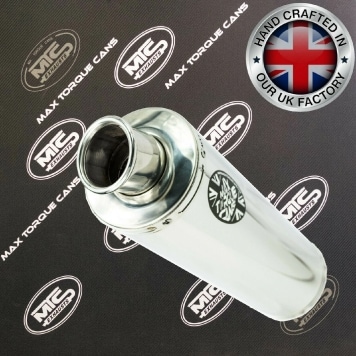
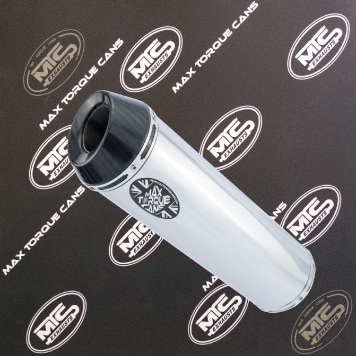
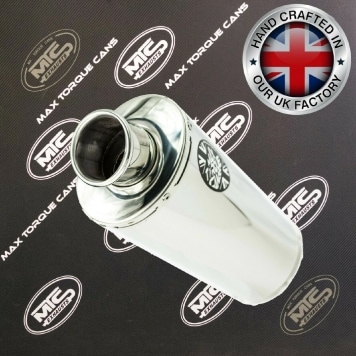
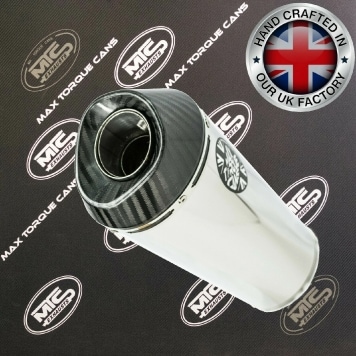
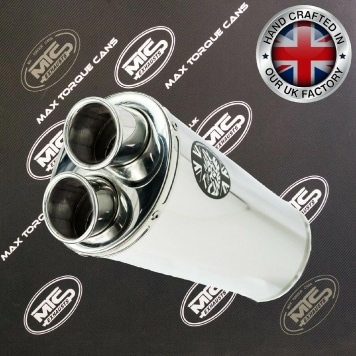
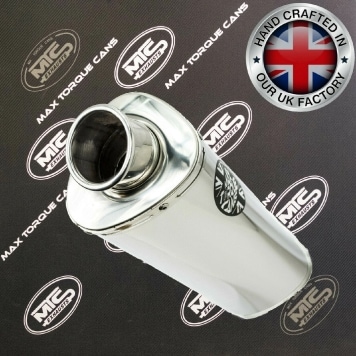
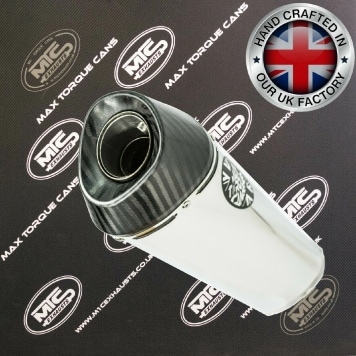
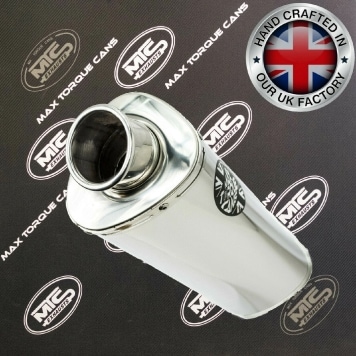
Please click on the exhaust below to see the 3D model




Gallery
[ngg src=”galleries” ids=”122″ display=”basic_thumbnail” thumbnail_crop=”0″]
Fitting Guide
 Loading...

 Reload document
  Open in new tab
 Road Legal / Race
All our Road Legal exhausts come with a Road Legal Baffle / Decibel Killer + BSAU ( British Road-Legal ) markings.
All our RACE exhausts do not come with a Road Legal Baffle / Decibel Killer + do not have any BSAU ( British Road-Legal ) markings. and are marked NOT FOR ROAD USE
2024 Road legal exhaust statement:
At Max Torque Cans we prioritise safety and compliance in the world of motorcycle exhausts. Our commitment to adhering to regulations is evident in our product design and labelling, and hence with new updates from ACEM, DVSA and DfT, we are ensuring our exhaust systems are compliant with new and upcoming legislation and regulations. Specifically, two changes detailed below:
Road Legal Exhausts: Our road legal exhausts will have the BSAU stamped markings and be crafted with non-removable baffles, aligning seamlessly with the standards set by ACEM (European Association of Motorcycle Manufacturers). These baffles are an integral part of our design to ensure that your motorcycle exhaust complies with road regulations, providing you with a legal and enjoyable riding experience.
Race Exhausts and Silencers: For those seeking an exhilarating experience on the track, our race exhausts are engineered to deliver optimal performance. Clearly marked with type approval markings “Not for Road Use” etched into the side, these exhausts are specifically designed for racing applications. This distinction is in line with DVSA policy, ensuring that our race exhausts are suitable for track use, meeting the highest performance standards without compromising on safety.
Fitting Guides
Related products
-
 Aprilia
APRILIA RSV 1000 MILLE 1998-2003
Price range: £ 138.46 through £ 327.66 This product has multiple variants. The options may be chosen on the product pageUnlock the full potential of your Aprilia RSV 1000 Mille 1998-2003 with our premium exhaust system. Gain serious horsepower and torque whilst enjoying that unmistakable Italian superbike sound. Easy bolt-on installation gets you riding harder in minutes.
-
 BMW
BMWBMW R1200RS 2015-2018
Price range: £ 137.60 through £ 328.52 This product has multiple variants. The options may be chosen on the product pageUnleash the true potential of your BMW R1200RS 2015-2018 with Max Torque Cans’ purpose-engineered performance exhaust. Experience a deeper, more characterful sound and striking visual upgrade that transforms your sport-tourer without compromise. Precision engineering meets authentic boxer-twin aggression.
-
 BMW
BMWBMW K1600 GT – GTL 2011-2026
Price range: £ 259.72 through £ 656.18 This product has multiple variants. The options may be chosen on the product pageUnleash your BMW K1600 GT – GTL 2011-2024 with Max Torque Cans’ performance exhaust. Experience a deeper, more authoritative sound whilst gaining genuine power gains—the ultimate bolt-on upgrade for serious riders demanding refined performance.
-
 BMW
BMWBMW R1200RT 2005-2013
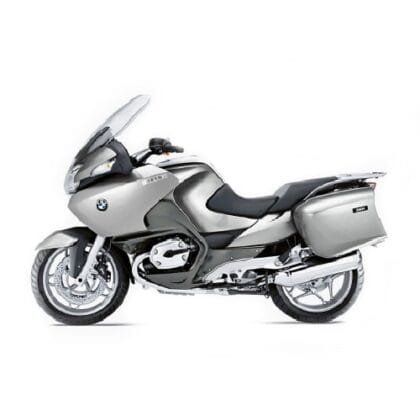
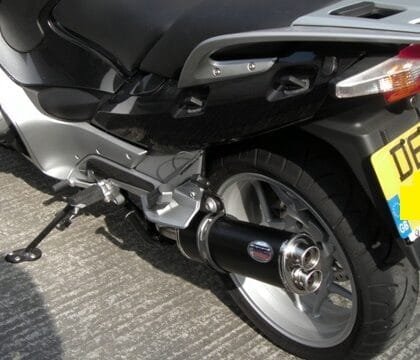
Price range: £ 137.60 through £ 328.52 This product has multiple variants. The options may be chosen on the product pageUnleash the full potential of your BMW R1200RT 2005-2013 with Max Torque Cans performance exhaust. Gain increased horsepower and torque whilst enjoying a distinctive, aggressive sound that turns heads on every ride. Premium engineering meets sport-touring excellence.
-
 Ducati
DUCATI ST2-ST3
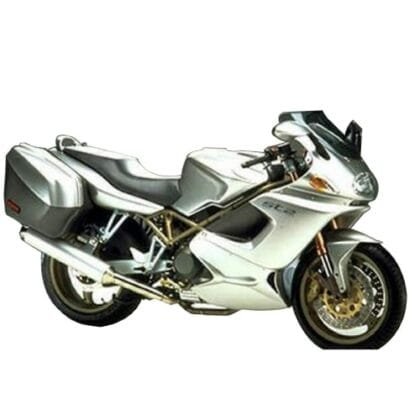
Price range: £ 259.72 through £ 656.18 This product has multiple variants. The options may be chosen on the product pageUnlock peak performance with our precision-engineered Ducati ST2-ST3 exhaust system. Designed for riders demanding sport and touring excellence, this bolt-on upgrade delivers increased horsepower and an aggressive exhaust note that matches your bike’s ambition.
-
 CCM
CCMCCM R30
Price range: £ 137.60 through £ 328.52 This product has multiple variants. The options may be chosen on the product pageUnlock the full potential of your CCM R30 with our UK-engineered slip-on performance exhaust. Premium stainless steel construction delivers enhanced power and a commanding sound, whilst effortless installation means you’re riding better in minutes.

